How to Use Proxifier: Step-by-Step Guide
Tutorials

Justas Palekas
Key Takeaways
-
Proxifier routes desktop applications through proxy servers even if those apps lack built-in proxy settings.
-
You can use it to manage your network traffic using custom routing rules based on applications, IP addresses, or ports.
-
Features like proxy chaining improve privacy and connection stability.
Websites and restricted networks often block specific IP addresses or restrict access by geographic region. While proxy servers can bypass these blocks, many desktop applications lack built-in proxy settings.
Proxifier provides universal integration by intercepting network connections from your applications and routing them through a proxy server.
What Is Proxifier?
Proxifier is a system-level routing tool that supports HTTP, HTTPS, SOCKS4, and SOCKS5 protocols for the Windows operating system. It works with nearly any proxy type, including residential proxies , datacenter , ISP , and mobile proxies . While the varied protocol support and proxy type universality are great, its most powerful feature is the rule system.
Instead of routing your entire operating system through a single server, you can create specific rules to assign target IP addresses or network ports to different proxies simultaneously.
In simple terms, you can use a different proxy for every application or even website as long as you set up the rules correctly.
Collecting and Understanding Your Proxy Details
Proxifier doesn’t provide proxies themselves; you’ll have to find a reliable proxy provider to do so. Since it only routes traffic, getting Proxifier without our own proxies is a lost cause.
When you do get proxies, make sure you have this information ready:
- The proxy address (the proxy server IP) or hostname
- The port number
- The protocol type (like HTTPS or SOCKS5)
- Your login credentials (username and password) if your proxy requires them
When choosing your protocol, remember that HTTP and HTTPS proxies are best for standard web traffic. If you need to route traffic for SSH, game launchers, or custom software, SOCKS5 is the better choice because it handles arbitrary TCP connections rather than just web requests.
Note that Proxifier routes TCP traffic only. UDP connections (used by many online games for gameplay data) bypass it and go directly to the server.
Which Proxy Type Should You Pair With Proxifier?
Proxifier works with any of them, but your use case decides. Residential proxies route through real home IP addresses, making them the best fit for scraping and accessing region-locked content.
Datacenter proxies are the fastest and cheapest, ideal when speed matters more than looking like a household user. ISP proxies combine datacenter speed with residential legitimacy for long sessions.
Mobile proxies use carrier IP addresses and carry the most trust with strict platforms. Whichever you choose, the proxy details you enter into Proxifier’s proxy settings are the same four fields.
Setting Up Proxies in Proxifier
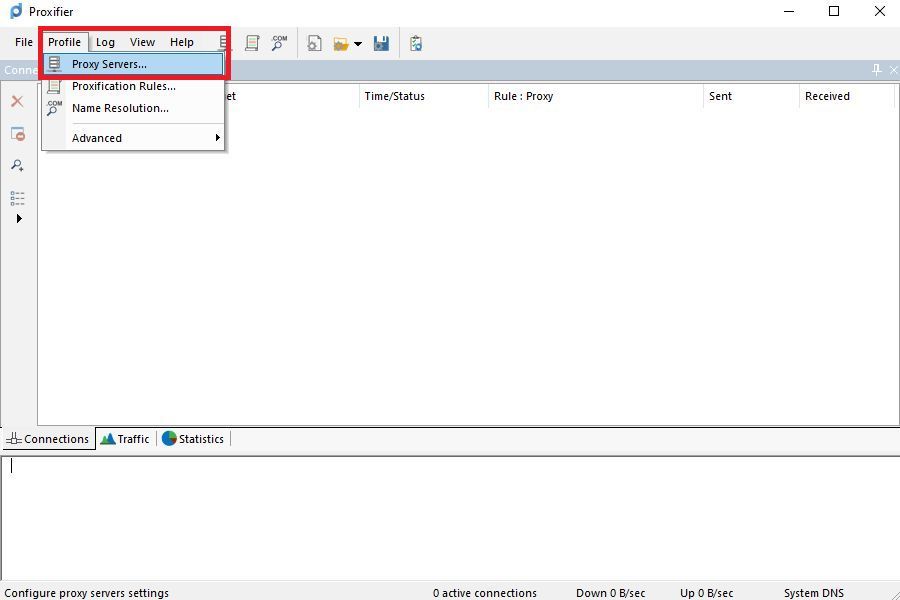
After opening Proxifier, click on ‘Profile’ and choose ‘Proxy Servers’ from the menu.
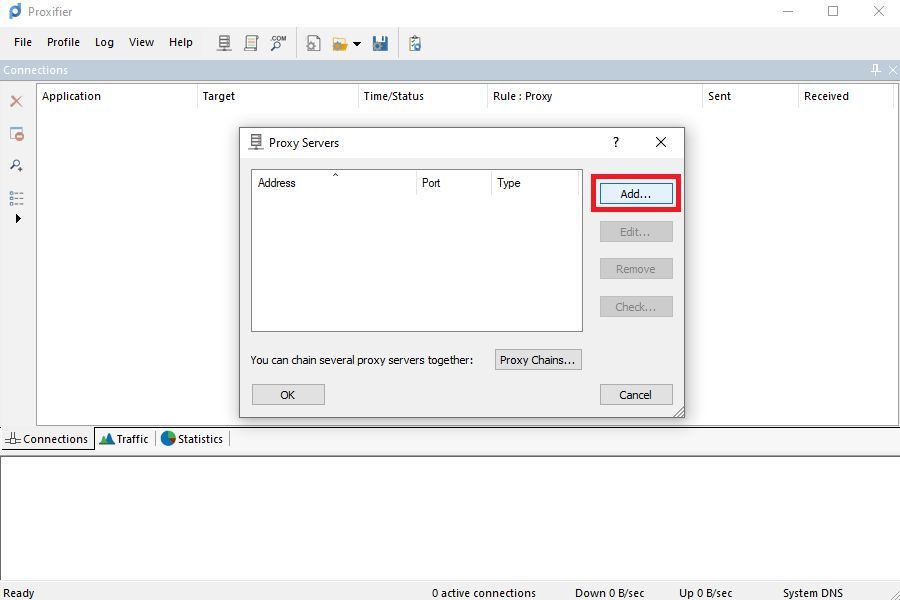
Click the ‘Add’ button on the right side of the pop-up window.
Get your proxy credentials from the IPRoyal dashboard. You’ll need the host (“geo.iproyal.com”) and port (“12321” for HTTPS proxies) along with your username and password.
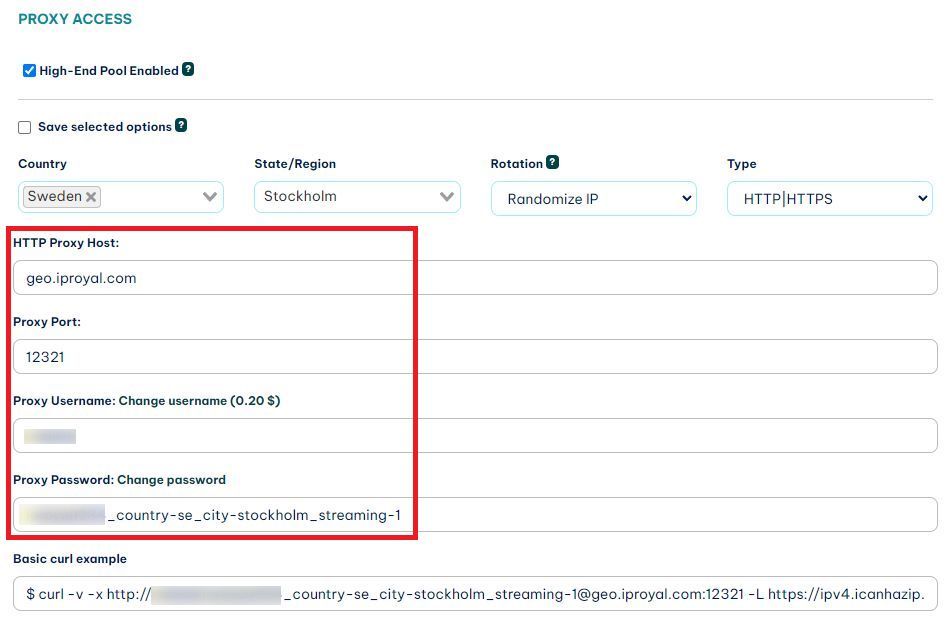
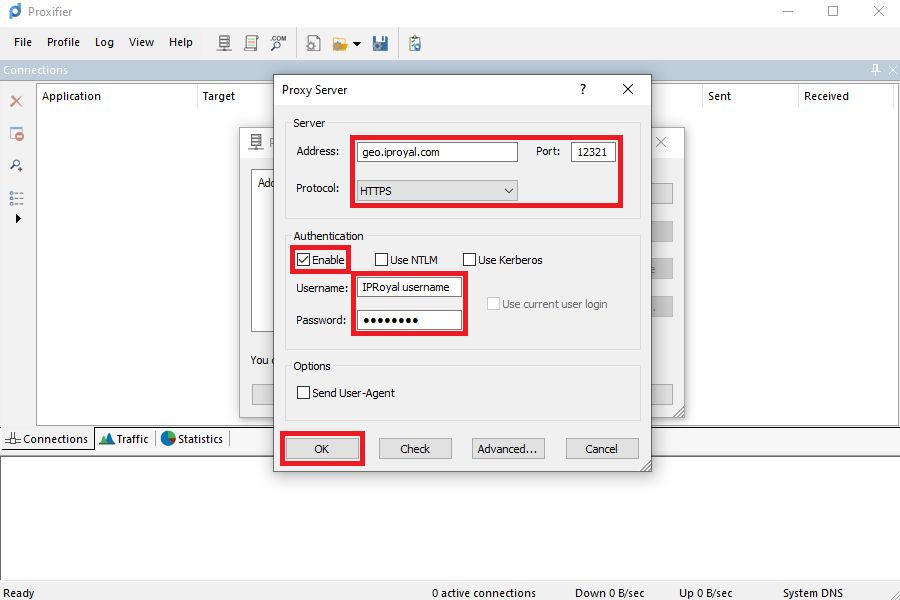
Enter your proxy credentials in Proxifier and click ‘OK’.
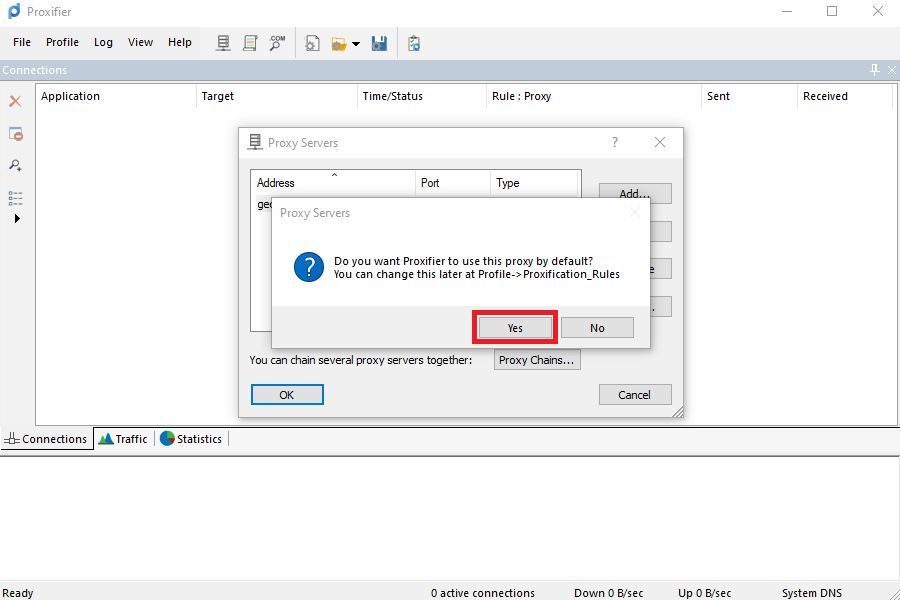
A new window will pop up asking if you wish this to be your default proxy for every application. Depending on your preference, select the option you want.
Don’t forget to test your proxy and make sure it works using Proxifier’s built-in proxy checker (Windows only).
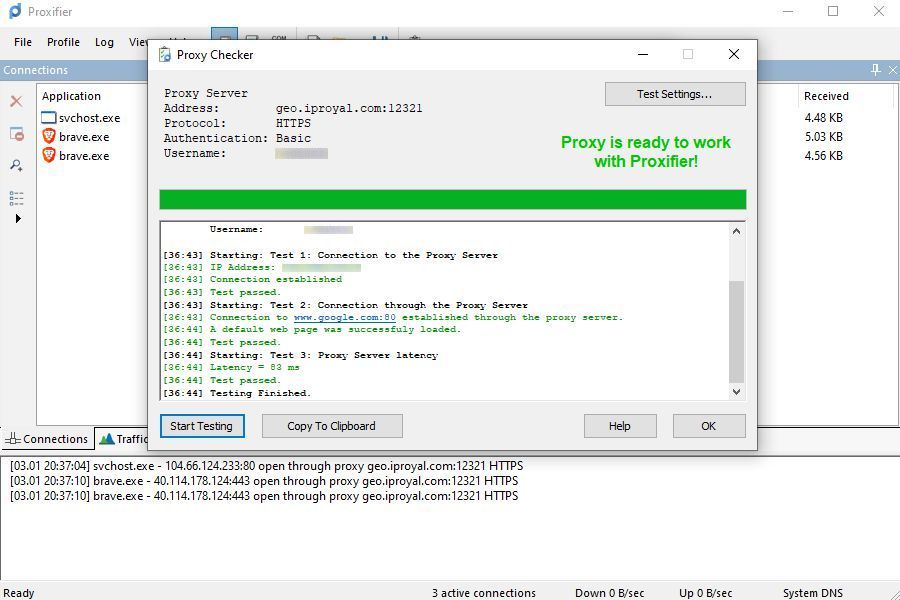
Once the testing is complete, select ‘OK’, and Proxifier will start using your new proxy for all connections.
Creating Proxification Rules for Apps and Traffic
Proxification rules define exactly which applications use your proxies. You set this up through the ‘Profile’ menu by selecting ‘Proxification Rules’. From there, you can tell specific programs to use a proxy, use a proxy chain, or establish a direct connection to the internet without a proxy.
Proxifier reads your rules from top to bottom and applies the first match it finds. The ‘Default’ rule sits at the very bottom of the list and handles any traffic that doesn’t match your custom rules. You can add a new rule for a program simply by browsing for its .exe file on Windows or selecting the application on macOS.
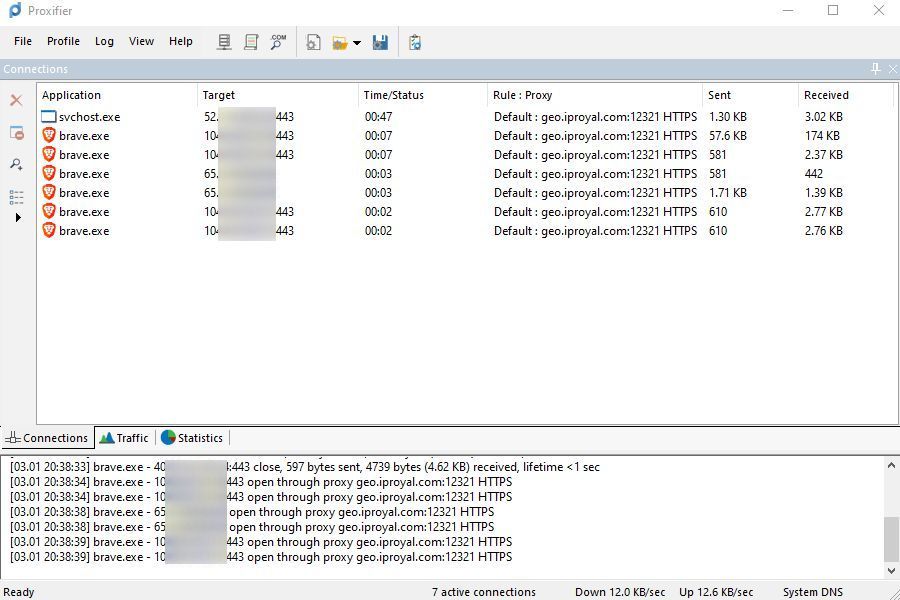
For example, you can route your browser through a specific proxy but let your other apps connect directly, without a proxy connection. Once your rules are active, use the main Proxifier window to monitor live traffic, which helps you verify that connections are routing exactly as you intended.
If you notice that traffic is failing to route entirely, check your antivirus software. Security programs occasionally block Proxifier from intercepting network calls.
Using Proxy Chains for Rotation and Anonymity
Proxifier lets you group multiple proxy servers together into a chain. Instead of routing traffic through a single server, you can use these groupings to route connections through multiple hops, rotate your IPs, or ensure proxy connection stability.
You can set your proxy chain to one of three modes:
- Simple chain. Routes your traffic sequentially through every proxy in the list, going from proxy A to proxy B to the destination.
- Load balancing. Distributes your connections across the proxies in your list, which works like a basic IP rotator.
- Redundancy. Routes traffic through the first proxy in the list and only switches to the backup servers if the primary proxy goes offline.
To build a proxy chain, open the ‘Proxy Servers’ menu and click the ‘Proxy Chains’ button. Drag and drop at least two proxies into the new chain and select your preferred mode. Once the chain is saved, you can assign it as the action inside any of your proxification rules.
Name Resolution and Preventing DNS Leaks
By default, your computer uses its system DNS to resolve web addresses, which can cause a DNS leak. In turn, it exposes your browsing requests to your internet service provider even when your main traffic goes through a proxy. You must configure Proxifier to handle name resolution securely to prevent it.
To stop DNS leaks from happening altogether, you need Proxifier to resolve hostnames through the proxy server. You can do that by going to the ‘Profile’ menu, clicking ‘Name Resolution’, and selecting the option to resolve hostnames through the proxy.
Don’t rely on automatic detection or wait for a leak test to expose your real IP. If you want privacy, enable remote DNS immediately.
Proxifier Alternatives for Other Platforms
While Proxifier is available for Windows, macOS, and Android, it doesn’t support Linux or iOS. If you use those operating systems, you’ll need a different tool to manage your proxy routing.
These are some popular alternatives for other platforms:
- Proxychains. A command-line tool that handles system-wide routing on Linux.
- Shadowrocket. A popular app for managing advanced proxy rules on iOS devices.
- Postern. A free alternative to the official Proxifier app for Android users.
Because these apps use standard protocols like HTTP and SOCKS5, the proxy credentials you gathered earlier work across every one of them; only the interface changes. You can plug IPRoyal proxies into any of these tools to easily route your traffic on any device.
Final Thoughts
Proxifier offers a 31-day free trial, giving you plenty of time to test it out before buying the $39.95 lifetime license (per platform). Once you learn how to use custom rules and proxy chains, you will have total control over exactly how your desktop apps connect to the internet.
To get the most out of your new routing rules, you need high-quality proxies. IPRoyal provides fast and stable proxies that pair perfectly with Proxifier, no matter what kind of traffic you need to route.
FAQ
Is Proxifier a VPN?
No, Proxifier is not a VPN; it’s a proxy client. While a VPN provides network servers and encrypts your entire internet connection, Proxifier simply routes your application traffic through proxy servers you provide yourself.
Is Proxifier free and how much does it cost?
Proxifier offers a 31-day free trial. After the trial ends, you need to buy a lifetime license for a one-time fee of $39.95.
What are the free alternatives to Proxifier?
Depending on your operating system, popular free alternatives include Proxychains for Linux and Postern for Android.
Can I use Proxifier with a VPN at the same time?
Yes, but it’s not recommended. Running Proxifier alongside a VPN often creates severe lag and routing conflicts because both programs try to intercept your network traffic at the system level.
Can Proxifier bypass geo-restrictions?
Yes, if you use a proxy located in your target region. Proxifier routes your application traffic through that specific proxy, masking your real IP address and allowing you to bypass regional blocks.
Is Proxifier available on phone (iOS/Android)?
Proxifier has an official app for Android. However, it’s not currently available for iOS devices.
Is using a proxy with Proxifier legal?
Yes. Using Proxifier to route your traffic through proxy servers is legal in most jurisdictions, provided you’re not using it to commit cybercrimes or violate terms of service.