Web Scraping for Machine Learning: A 2026 Guide
AILearn how web scraping fuels machine learning by extracting and structuring fresh data to train predictive models.


Nerijus Kriaučiūnas
Key Takeaways
-
Combining extraction pipelines with machine learning allows developers to build systems that adapt to real-world changes.
-
Feeding vast amounts of text into neural networks forms the backbone of modern NLP.
-
Scaling up your collection efforts requires robust proxy networks to avoid continuous blocking while gathering data for machine learning models.
Building algorithms that understand the world requires stockpiling massive amounts of information to feed scheduled training runs. This is where web scraping comes in, letting developers write code that grabs HTML from target URLs.
Feeding raw HTML straight into an algorithm introduces massive amounts of structural noise, requiring developers to parse the content into a predictable, structured format before moving forward.
Projects usually rely on one-off scripts to grab an initial dataset , continuous pipelines that fetch daily updates, or dynamic crawlers that navigate complex site layouts. Creating an efficient, structured format at the start saves headaches later.
How Web Scraping Powers Machine Learning
Predictive models experience concept drift when they lose access to current events and changing human behaviors. Because the internet acts as a live record of human activity, feeding fresh web data into machine learning models prevents them from giving outdated answers.
Evaluating web scraping solutions early on helps teams make informed decisions about whether they should build their own infrastructure or buy off-the-shelf tools. A deployed model predicting stock prices requires today’s news headlines to maintain accuracy against shifting market conditions rather than relying solely on last year’s financial reports.
Combining web scraping with core machine learning essentially bridges the gap between the chaotic web and mathematical prediction engines. When a Python script pulls millions of forum posts, a deployed model processes the vectorized text to calculate sentiment probabilities regarding the public mood.
How Web Scraping Fits Into ML Pipelines
Data pipelines generally push information through sequential stages, handling collection, validation, and feature engineering to prepare inputs for downstream machine learning projects. Pushing raw information through this loop requires many transformations to make the inputs useful for machine learning projects.
Developers routinely write scrapers to grab thousands of property listings to generate the feature spaces required to feed a pricing model. Or maybe you rely on data extraction to pull daily flight prices so a deployed model can predict the optimal time to buy tickets.
Getting the initial text is just step one before the pipeline strips out the noise. Transforming scraped dates into “days until holiday” features gives machine learning models much better signals to work with. The quality of your web scraping dictates the ceiling of your model’s accuracy.
Core Uses of Scraped Data in Machine Learning
Engineers leverage this crawled data primarily for training, generating features, building augmentations, and tracking model drift over time. Relying on static datasets downloaded years ago severely limits what machine learning models can actually achieve in production.
Data-heavy domains like natural language processing and computer vision benefit extensively from pulling continuous streams of information off the internet. Utilizing advanced web scraping allows researchers to gather massive amounts of text for generative AI development.
Feeding billions of scraped paragraphs into a neural network forms the foundation of modern natural language processing. Handling visual tasks involves scraping images from public directories to train parameterized computer vision models capable of recognizing everyday objects in messy environments.
The Python Stack for Web Scraping and ML
Looking at a typical workflow, developers usually write scripts to grab raw HTML before passing the cleaned results into data science libraries. You will almost always see Requests and BeautifulSoup handling the initial fetch and parse phases for simpler pages.
Stepping up to larger tasks, Scrapy handles thousands of concurrent requests while pushing the outputs directly into databases for machine learning processing. Setting up continuous data scraping jobs ensures the database never goes stale.
The transition from raw data in a database to actual training inputs is where things often break. Tying the collection scripts, database migrations, and model training together requires orchestration tools like Airflow or Prefect.
These tools manage the execution states across the entire pipeline, ensuring a failed scraping job triggers a retry before the training script even attempts to pull new data from the database at 3 AM. For the math side, pandas cleans up the resulting tables before scikit-learn or PyTorch actually processes the numbers.
Static vs Dynamic Content: Choosing the Right Tools
Fetching simple HTML pages works fine with Requests, but modern web applications heavily rely on JavaScript to render elements on the screen. Pointing a basic script at a React single-page application usually just returns a blank page or a loading spinner.
Extracting data from dynamic pages requires driving a headless browser with Selenium or Playwright to provide the runtime environment necessary for client-side JavaScript execution. This is crucial when targeting complex ecommerce websites that load prices dynamically.
Either way, driving a full browser consumes a massive amount of memory when running thousands of instances. Monitoring the network tab reveals the undocumented asynchronous endpoints feeding the application state, allowing developers to bypass DOM rendering entirely before deciding to spin up Selenium.
Finding a clean JSON response saves you from writing complex logic to parse a heavily obfuscated HTML document.
Ensuring Data Quality for ML Models
Pushing garbage text into a neural network guarantees garbage predictions on the other side.
Engineers spend countless hours deduplicating records, normalizing text encodings, and handling missing values to construct reliable feature spaces before feeding the extracted payloads into the training pipeline.
Running the resulting tables through profiling tools helps catch anomalies before the data hits the training script. Maintaining original tables yields poor downstream results when the target variables mapped during the annotation phase misrepresent the scraped ground truth.
Real-World Use Cases of Web Scraping for ML
Financial firms constantly pull earnings reports and press releases to feed into sentiment analysis algorithms. Processing this text allows trading algorithms to react to positive or negative news faster than human analysts.
Moving over to retail, platforms execute data collection against competitor catalogs to feed automated repricing pipelines and calculate dynamic market positioning. Building accurate recommendation systems requires knowing exactly what the market is doing.
Web scraping external threat intelligence forums and public sanction lists helps banks enrich the feature spaces feeding their internal fraud detection networks. Analyzing text from customer reviews powers advanced sentiment analysis dashboards for marketing teams.
These applications all showcase the intersection of web scraping and applied machine learning.
Overcoming Web Scraping Challenges at Scale
Grabbing a few pages is trivial, but pulling millions of records daily triggers sophisticated anti-bot systems almost immediately. Servers will quickly hand out IP bans or impose strict rate limits if they see hundreds of requests originating from the same datacenter.
Sourcing connections through residential networks masks the datacenter origin, requiring developers to manage execution timing and protocol-level heuristics to evade systems identifying synthetic interactions. Securing residential proxies provides the foundational network classification required to begin blending in with regular human traffic during large-scale extraction operations.
Global Pool, Precise Targeting, Zero Contracts
Premium Residential Proxies
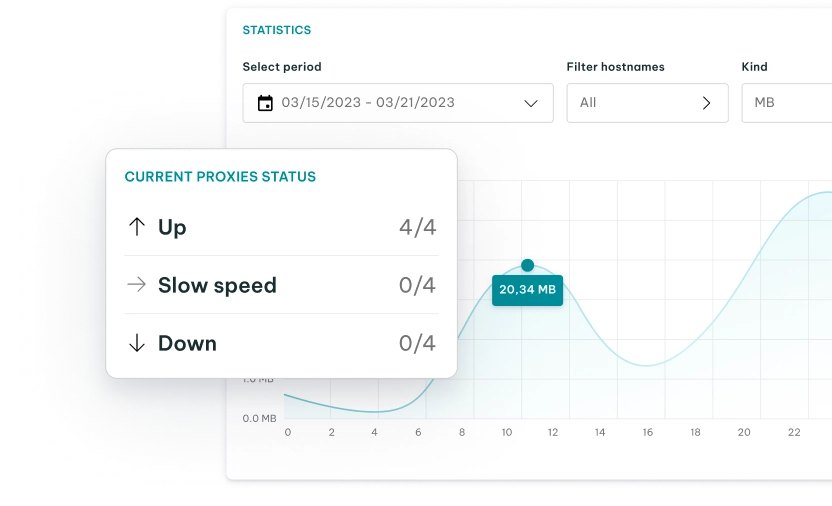
Rotating IP addresses addresses legacy volumetric constraints, requiring engineers to manage TLS handshakes and browser fingerprints to navigate modern security layers, analyzing protocol-level anomalies.
Maintaining reliable access is the hardest part of training machine learning models that depend on live web data. Dealing with heavy protections on modern ecommerce websites often demands premium proxy networks .
Legal and Ethical Considerations
This overview is for informational purposes only and does not constitute legal advice.
Developers generally inspect the robots exclusion protocol to manage crawl rates while recognizing that web scraping unauthenticated public domains operates outside the contractual boundaries of standard terms of service.
Global privacy frameworks mandate establishing a distinct legal basis for processing extracted personal records to prevent training pipelines from baking identifiable information into the model weights.
If your training data overrepresents a specific demographic simply because they post more online, your resulting algorithm will likely exhibit severe bias. Implementing ethical web scraping practices protects your organization from public backlash.
Conclusion
Maintaining large-scale predictive models relies heavily on the open web as a primary data source, making efficient extraction workflows the determining factor in whether a deployed system retains its accuracy or falls victim to rapid concept drift.
Building the infrastructure to pull, validate, and construct reliable feature spaces for production endpoints requires a solid grasp of network protocols alongside robust data engineering practices.
The web is messy and constantly shifting. Engineers who can navigate rate limits, dynamic rendering, and messy HTML are ultimately the ones dictating the quality of tomorrow’s automated systems.
FAQ
How much scraped data do I need to train a useful ML model?
The required volume depends on the dimensionality of your target feature space and the variance present within the extracted datasets. Deep neural approaches usually require millions of rows, while simpler statistical setups might only need a few thousand. Expanding your web scraping targets generally improves the final results.
Can I use web-scraped data to fine-tune large language models?
Fine-tuning pre-trained foundation models on domain-specific text shifts the internal weight distributions to improve performance across specialized tasks. Grabbing niche forum discussions provides excellent training material for these large machine learning models.
How do I keep my ML models up to date as websites change?
Setting up continuous extraction pipelines builds the updated feature spaces necessary to support scheduled retraining cycles or dynamic retrieval systems. Running automated web scraping scripts on a schedule feeds fresh data directly into your databases. This constant flow of information keeps your machine learning models from decaying over time.