T-Mobile vs Verizon Proxies: Does the Carrier Actually Matter?
Software comparisonsSee how T-Mobile and Verizon mobile proxies compare and whether you should focus on the carrier or the proxy provider.

Milena Popova
Key Takeaways
-
The proxy provider impacts your success rates far more than the telecom logo stamped on the SIM card.
-
Both networks use Carrier-Grade NAT (CGNAT), which gives mobile IPs the high trust scores needed to bypass strict security filters.
-
Unless you need highly specific rural targeting or strict software testing, your choice of network should remain flexible.
T-Mobile and Verizon are mobile carriers that provide dynamic IP addresses to mobile devices via Carrier-Grade NAT (CGNAT). Since blocking these IPs left and right could negatively impact the business, websites are very careful about flagging them. As a result, people rely on these networks for operations that require high trust scores and low block rates.
The real question is whether picking one carrier over another actually changes your campaign’s outcome, and if your proxy provider’s hardware and setup matter more than the telecom network itself.
How T-Mobile and Verizon Mobile Proxies Work
Because IPv4 addresses are limited, carriers use Carrier-Grade NAT (CGNAT) to assign thousands of devices to a single public IP. One IP address, as such, represents a huge mix of legitimate user traffic.
IPs shared through network carriers protect your requests; if a server blocks your proxy IP, it risks accidentally blocking hundreds of real people using the same connection to check the weather or browse the web.
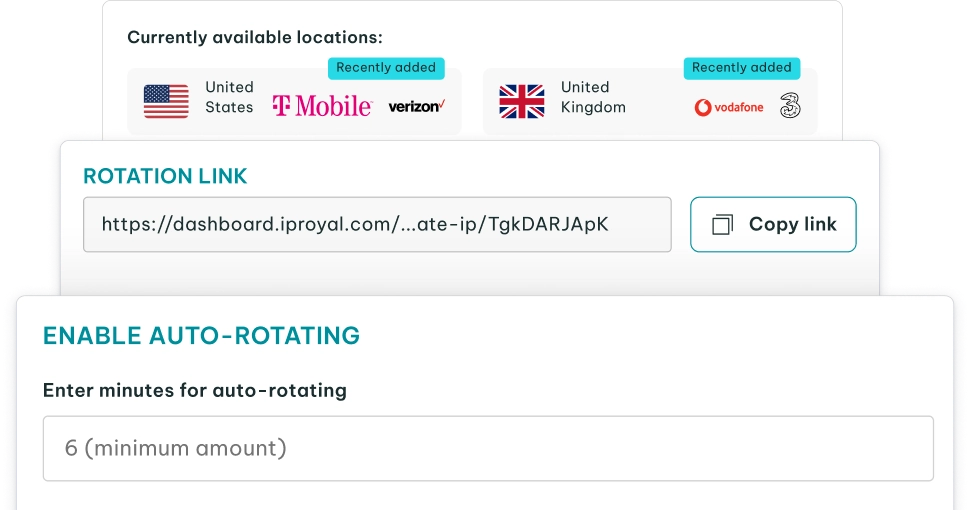
Most proxy providers include both T-Mobile and Verizon in their pools, since the architecture is so reliable, giving you high-quality connections regardless of which carrier you choose.
Both carriers outperform datacenter proxies because their traffic comes from real mobile devices. Target servers see a legitimate consumer connection rather than a server in a data center.
T-Mobile Mobile Network - Strengths and Limitations
As of 2026, T-Mobile maintains a dominant position when it comes to 5G networks. It operates a network that covers most major metropolitan areas and supports a massive user base.
- T-Mobile’s 5G network speeds can comfortably handle high-volume data transfers and concurrent requests with minimal latency.
- Their coverage is strongest in dense urban and suburban areas, perfectly aligning with where most consumer network traffic originates.
- The high volume of active subscribers creates large CGNAT clusters. It masks automated traffic among regular users, resulting in high success rates for complex operations.
However, there are limitations. T-Mobile still faces coverage gaps in deep rural areas. Furthermore, proxy users in densely populated downtown zones may experience bandwidth throttling during peak evening hours due to heavy consumer network congestion.
Verizon Mobile Network - Strengths and Limitations
Verizon relies on its near-universal LTE backbone for nationwide coverage, while deploying high-speed 5G mid-band and mmWave networks across most urban and suburban areas.
Operators who route their automated requests through Verizon infrastructure typically benefit from several advantages:
- Verizon’s infrastructure is highly resilient against severe weather and local network strain, providing the consistent uptime required for long-duration proxy campaigns.
- Verizon boasts the widest geographic footprint in the US, offering access to diverse, deep-rural connection points that competitors often miss.
- This vast LTE reach provides a highly dependable fallback option whenever 5G network connections temporarily drop out.
Because Verizon’s 5G geographic coverage is smaller than T-Mobile’s, mobile proxy traffic outside of major metropolitan areas will default to standard LTE speeds more frequently.
Head-to-Head - Where the Networks Actually Differ
Coverage
T-Mobile leads in urban high-frequency node access, while Verizon offers a broader nationwide coverage that reaches deeper into rural areas.
Speed and 5G Performance
The technical difference lies in frequency utilization: T-Mobile relies on its extensive mid-band spectrum for widespread high speeds, while Verizon uses a combination of mid-band (C-band) and mmWave to deliver high throughput across urban and suburban zones.
IP Trust and Success Rates
Both networks easily bypass the filters that normally block datacenter proxies. While you might see slight variations in success rates depending on your target platform, the difference in block rates between the two carriers is minimal for most automation tasks.
Geographic Distribution
Targeting specific geographic locations depends on your network choice: T-Mobile carrier IPs cluster around coastal and major inland cities, whereas Verizon’s connection points are spread more evenly across small towns, highways, and suburbs.
Why the Proxy Provider Matters More Than the Carrier
Once your traffic hits a cellular node, the provider’s hardware and routing software determine whether you succeed or get blocked.
Two vendors using the same carrier can produce very different results based on how they manage their hardware and handle authentication. The carrier provides the network, but the provider’s engineering determines how well it actually performs for you.
You have to evaluate several provider-controlled elements that matter far more than the basic carrier selection process:
- How the provider schedules IP rotations directly affects your session stability and block rates.
- The physical geographic distribution of the provider’s actual modem farm determines your targeting granularity down to the city level.
- Good providers use reputation management to pull flagged IPs out of the pool until they are clean again.
- Sticky session handling mechanisms allow you to maintain an unbroken, persistent connection during complex, multi-page checkout flows.
- Dashboard controls dictate exactly how easily you can switch between geographical locations or force manual network resets.
- The number of users sharing a single SIM card determines whether your connection stays fast or hits a bottleneck.
- Gateway routing efficiency determines the base latency penalty before your request even physically hits the telecom tower.
If a vendor overloads a modem with too many users, your success rates will tank, no matter whose logo is on the SIM card.
Common Misconceptions About T-Mobile and Verizon Proxies
New proxy users often rely on outdated assumptions, which leads them to focus on the wrong metrics when setting up their systems.
Keep these common myths in mind when planning your network strategy:
- One carrier is naturally safer than the other.
- A particular network automatically triggers more aggressive security challenges across all websites.
- Your choice of cellular network single-handedly guarantees higher success rates across the board.
- Higher-tier consumer data plans result in cleaner or higher-trust proxy connections.
In reality, both networks have a mix of clean and flagged carrier IPs. A node’s reputation depends entirely on how previous users behaved before the IP rotated to you.
How to Choose the Right Mobile Proxy Provider
Focusing your evaluation on the proxy vendor rather than telecom branding is the best way to improve your long-term success. Scrutinize how a company manages its hardware before worrying about which carrier broadcasts the signal.
To evaluate the provider properly, look closely at a few non-negotiable standards to ensure high performance:
- Ask for transparency on how they source their IPs, specifically, whether they use dedicated SIM farms or peer-to-peer networks.
- Test the precise mechanisms they offer for controlling rotation intervals and forcing clean, new connections on demand.
- Verify their options for extended sticky sessions, as many modern providers now support continuous sessions ranging from 30 minutes up to 24 hours.
- Check whether they offer specific city-level targeting or if they restrict users to broad, vaguely defined national gateways.
- Question their hardware density heavily to ensure they run a low ratio of clients per physical modem.
- Investigate their filtering practices to see how long they let flagged IPs cool down before returning them to the active pool.
Running a small trial tells you far more about a vendor’s routing quality than reading their marketing copy. Monitor your success rates, track CAPTCHA frequencies, and measure latency to identify exactly where your operational bottlenecks are.
When Carrier Choice Does Make a Practical Difference
While vendor quality is the biggest factor in performance, a few technical scenarios still require you to choose a specific telecom network.
You should specify your cellular network only when actively managing these particular edge cases:
- Targeting rural areas where only one carrier provides reliable coverage.
- Running localized ad verification that requires matching a specific carrier’s regional IP range.
- Testing mobile app behavior across different cellular signatures to validate performance.
- Diagnosing mobile app performance issues is tied directly to how a specific telecom handles its packet routing protocols.
For social media platform automation, web scraping, or price monitoring, the specific carrier is a minor detail. Your priority should be finding a vendor with a reliable, high-quality infrastructure.
Global Pool, Precise Targeting, Zero Contracts
Premium Residential Proxies
Choosing Between T-Mobile and Verizon Proxies in 2026
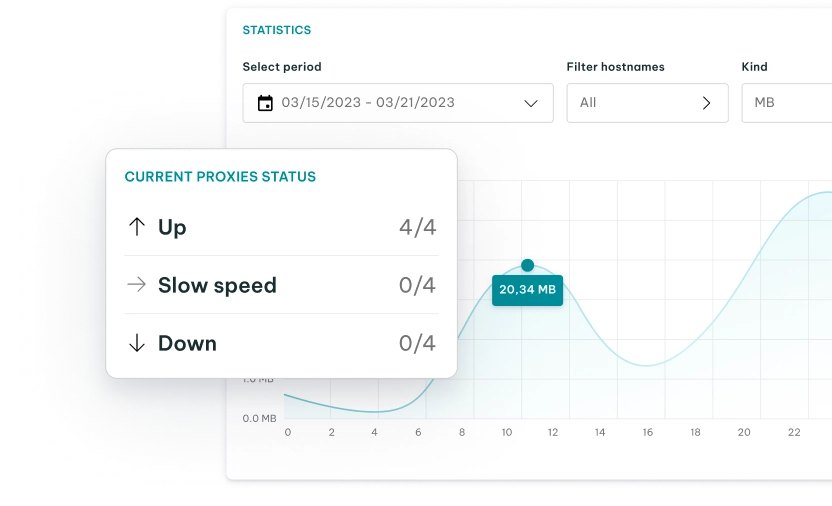
For most standard workflows, focus on choosing the right vendor first and treat the cellular network as a tunable parameter within your dashboard. A provider with a poorly optimized or small IP pool will ruin your success rates, regardless of the carrier network.
To get the most accurate performance data, split your traffic across both networks to see how your target servers respond to different carrier signatures.
FAQ
Is it better to use only T-Mobile proxies or mix T-Mobile and Verizon?
Mixing networks adds diversity to your routing, making it harder for sensitive platforms to flag patterns in your traffic as you scale.
Are T-Mobile and Verizon mobile proxies legal to use?
Using proxies is legal for tasks like market research, ethical data collection, SEO monitoring, and more, provided your activities comply with local laws and the website’s Terms of Service.
How do T-Mobile and Verizon proxies compare to residential proxies?
Mobile proxy types often have higher trust scores due to CGNAT. Residential proxies are tied to individual homes, which can be easier for servers to flag or restrict than a massive shared cellular gateway.
Which carrier gives more accurate results for mobile ad verification in 2026?
For the best results, use the carrier that’s prevalent in your target region. Ad verification is most accurate when your proxy IP matches the specific location of your audience.
How often should I rotate Verizon and T-Mobile IPs for social media account management?
Match your IP rotation to your activity: use a sticky connection for a single session (like managing one profile), but rotate your IP before switching to a new account.