Best B2B Data Providers for Sales and Marketing Teams in 2026
Software comparisonsEvaluate top B2B data providers to track down accurate contact records and intent signals for your sales reps.


Karolis Toleikis
Key Takeaways
-
Quality B2B contact databases save your team from chasing dead leads by keeping their data accurate and up-to-date.
-
Pairing deep sales intelligence with accurate contact data is the key to driving higher conversions in complex campaigns.
-
The best B2B data strategies often involve blending your primary contact database with specialized enrichment tools to ensure high accuracy.
Reaching buyers at the exact right moment is what separates top sales reps from the rest of the pack. To give your team that edge, we’re comparing the best B2B data providers on the market, from basic contact databases to advanced intent data solutions.
With so many data vendors out there, the challenge is finding the one that offers the most accurate, compliant, and comprehensive coverage.
The Best B2B Data Providers at a Glance
When comparing B2B data providers, you have to weigh data accuracy and regional compliance just as heavily as pricing and database size.
| Provider | Database size | Starting price | Best region | Key differentiator | Free trial |
|---|---|---|---|---|---|
| ZoomInfo | 420M+ | Gated | North America | Deep enterprise sales intelligence and intent data | 7 days |
| Crustdata | 1B+ | Gated | Global | 15+ live data sources | Free plan |
| Apollo.io | 275M+ | Free or $49/month (billed annually) | North America | Consolidated B2B outbound sales workflow | Free plan and 14-day free trial |
| Cognism | Unspecified | Gated | EMEA | European data accuracy and compliance | No |
| Lusha | 300M+ | Free or $49.90/month | US, UK, Europe | High-accuracy direct contact data | Free plan |
| LinkedIn Sales Navigator | 1B+ | $119.99/month | Global | Real-time, first-party data | 30 days |
As you can see, the right contact database provider depends heavily on your team’s budget, target regions, and whether you need an all-in-one execution platform or purely a reliable data engine. Before you choose your sales intelligence platform, let’s break them down in more detail.
How We Evaluated the Best B2B Data Providers
To give you a fair comparison, we looked past the flashy marketing claims and tested how these platforms perform in the real world. Here is what we measured:
- Data accuracy. We examined each platform’s verification methodology to assess how well it prevents sales professionals from calling dead numbers or bouncing emails.
- Platform coverage. We assessed the depth of their firmographic data and technographic data to see how precisely you can build highly targeted, niche industry lists.
- CRM integrations. We tested native connections to sales intelligence platforms like Salesforce and HubSpot to ensure teams can seamlessly sync records and avoid messy CSV uploads.
- Data refresh cycles. We looked at how often contact database providers purge stale records and update their directories, so you aren’t paying for outdated information.
- Compliance. We reviewed how strictly each provider adheres to global privacy regulations (like GDPR and CCPA) to keep your outbound campaigns legally secure.
Outdated data derails your outreach quickly. High bounce rates will instantly tank your email deliverability and ruin your domain reputation.
Choosing a provider with rigorous data hygiene protects your sender reputation and ensures your sales team spends their time closing deals instead of constantly correcting contact info.
Best B2B Data Providers Reviewed
ZoomInfo
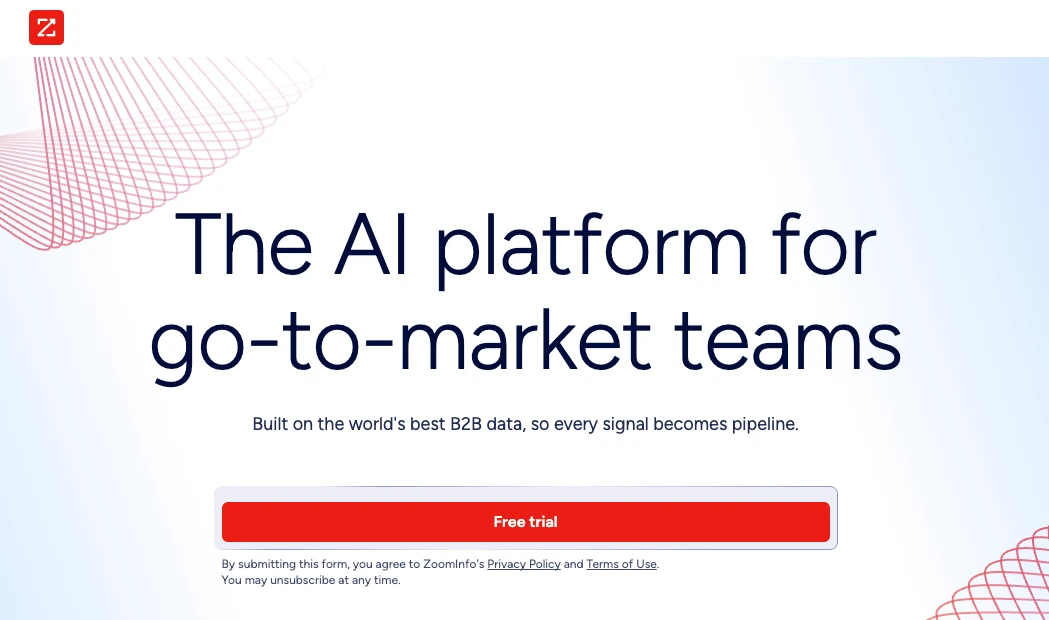
ZoomInfo holds the largest market share because its intent signals, combined with raw contact volume, give enterprise teams a massive sandbox to play in. Their interface offers an incredibly deep layer of firmographic data, helping reps narrow down target accounts fast.
- Database size: 420M+ profiles
- Region coverage: Primary focus is on North America, but global datasets also exist
- Integrations: Native support for Salesforce, HubSpot, Marketo, and other major sales intelligence platforms
- Compliance: GDPR and CCPA compliant, managing privacy through continuous opt-out notices
- Pricing: Undisclosed
Pros:
- Leading, high-quality buyer intent data
- Huge volume of direct-dial phone numbers
Cons:
- Expensive for small teams
- Steep learning curve
Crustdata
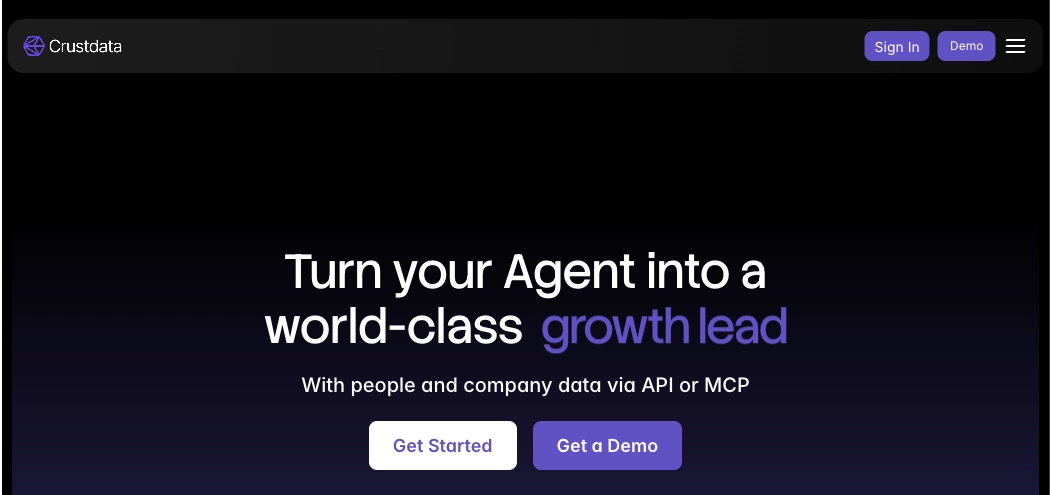
Crustdata is a real-time B2B data API rather than a dashboard, built for teams that pipe fresh people and company data straight into their own tools or AI agents. It combines 15+ live sources into the single most complete record for a person or company, so titles, headcount, and funding stay updated instead of going out of date.
- Database size: 1B+ people, 60M+ companies
- Region coverage: Global
- Integrations: REST API and an MCP connector for AI agents; syncs to Salesforce, HubSpot, and any stack via API
- Pricing: Usage-based credits, with a free tier to start
Pros:
- Real-time data refreshed at query time, plus built-in signals like job changes, funding, and hiring
- API-first and agent-ready, so it powers AI SDR and custom GTM workflows
Cons:
- API-first rather than a point-and-click UI, so non-technical teams may want engineering support
- A data and signals layer, not a full sales-engagement or CRM platform
Apollo.io
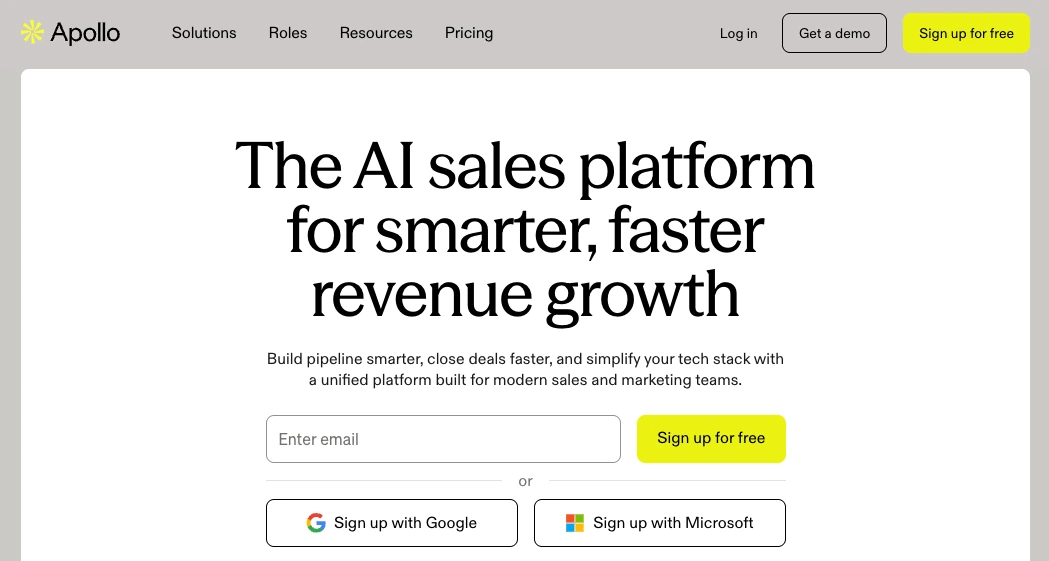
Merging a B2B database directly with sequencing tools means reps can find a prospect and drop them into an email cadence without switching tabs. Data quality can occasionally fluctuate outside of North America, making secondary email verification highly recommended for global campaigns.
- Database size: 275M+ contacts
- Region coverage: Global coverage with a strong presence in the US and growing European lists
- Integrations: Connects with standard CRMs and includes built-in sales engagement tools
- Compliance: GDPR and CCPA compliant, utilizing public data aggregation and a proprietary data-contributor network
- Pricing: Free or $49/month (billed annually)
Pros:
- Generous free tier
- Great data enrichment capabilities
Cons:
- Data quality occasionally fluctuates outside the US
- Customer relationship management (CRM) syncing is fairly basic on the lower-tier plans
Cognism
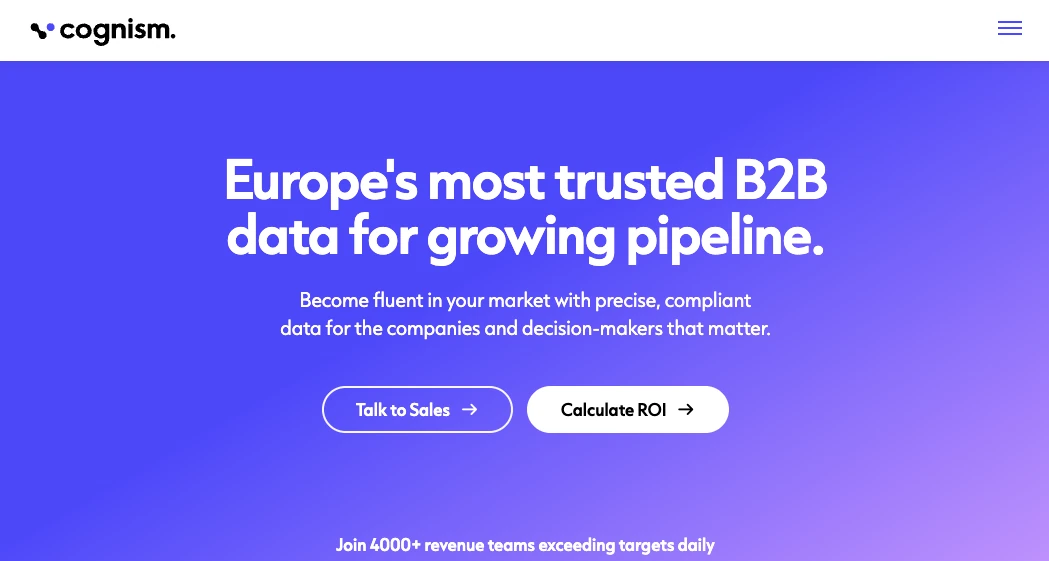
European outbound requires strict adherence to privacy laws like GDPR (General Data Protection Regulation). Cognism handles privacy laws by automatically scrubbing phone numbers against national Do-Not-Call (DNC) registries before your reps ever make a call.
Unrestricted viewing for business contacts lets reps build massive lists without worrying about arbitrary export credits capping their daily activity.
- Database size: Unspecified
- Region coverage: Mostly focused on EMEA with decent North American coverage
- Integrations: Natively connects with Salesforce, HubSpot, SalesLoft, Outreach, and more
- Compliance: Adheres to GDPR with DNC list scrubbing built within the platform
- Pricing: Undisclosed
Pros:
- Premium European B2B data
- Unrestricted viewing for business contacts
Cons:
- Unspecified entry cost
- Fewer intent signals than American competitors
Lusha
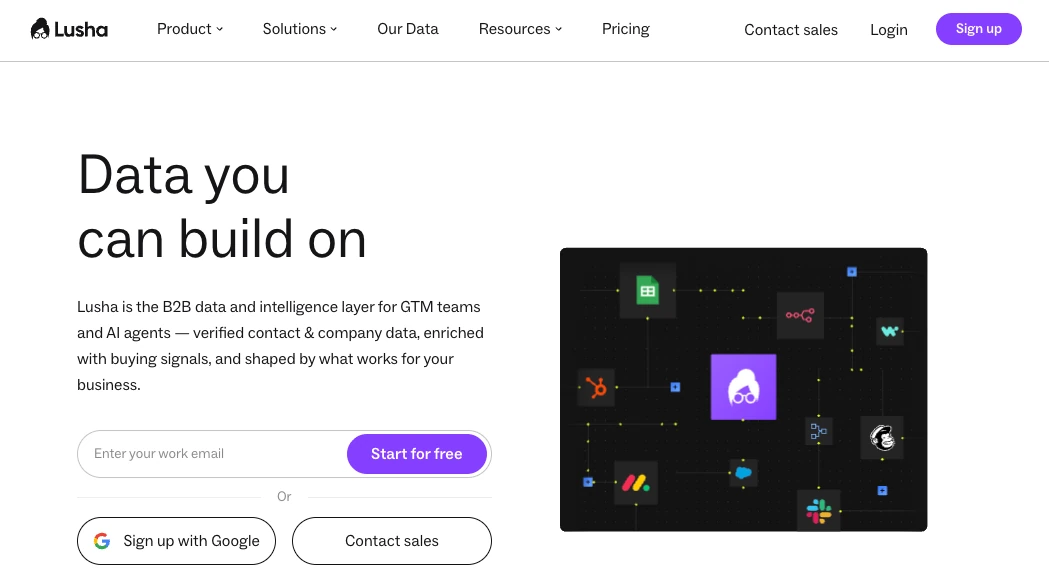
Lusha shines when it comes to on-the-fly prospecting. Their lightweight browser extension instantly overlays direct dials and verified email addresses as your reps browse a company website or LinkedIn profile.
- Database size: 300M+ contacts
- Region coverage: Primarily the US, UK, and Europe
- Integrations: Pushes data to Salesforce and standard sales tools via browser extension or API
- Compliance: Aligned with major privacy laws, heavily focused on community-based data validation
- Pricing: Free or $49.90/month
Pros:
- Highly intuitive and easy to use
- Accurate contact information for phone numbers and emails
Cons:
- Subscriptions can get expensive
- Primarily focused on data gathering instead of being a full-on outreach automation tool
LinkedIn Sales Navigator
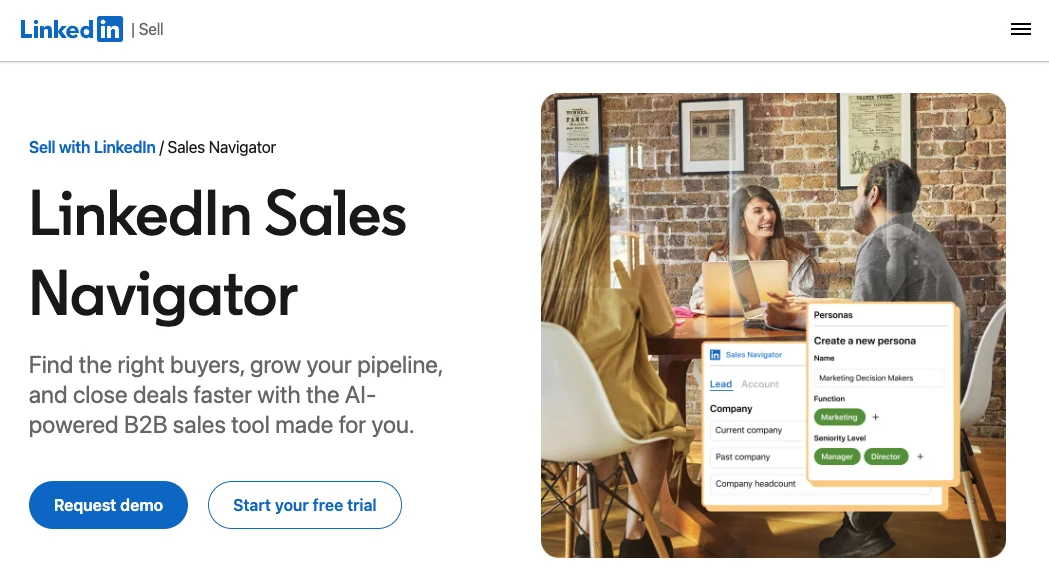
Because LinkedIn is maintained by its users themselves, Sales Navigator is unmatched for monitoring real-time network changes. You gain incredibly precise company data, but you cannot directly export those contacts into a cold outreach sequence.
- Database size: 1B+ user-maintained profiles
- Region coverage: Global, covering almost every region around the world
- Integrations: Logs activities to standard CRMs, but you need third-party tools for data extraction
- Compliance: Inherently compliant since users voluntarily maintain and share their own professional information
- Pricing: Starts from $119.99/month
Pros:
- The most accurate data for job titles
- Immediate visibility into target accounts
Cons:
- No direct B2B contact database export
- Lacks traditional data enrichment
Best B2B Data Providers by Use Case
Choosing the right platform comes down to your specific go-to-market motion:
- Enterprise teams, for example, require robust platforms driven by buyer intent signals and highly customizable CRM integrations.
- Growing teams usually lean toward an all-in-one B2B database to scale quickly and minimize technical overhead.
- For teams targeting EMEA, selecting a data vendor with strict, built-in GDPR compliance is non-negotiable to mitigate legal risks.
- Individual reps might only need a lightweight browser extension to pull direct dials on the fly.
- Lean startups often leverage a stack of freemium tools to build their initial lists cost-effectively.
- Complex account-based marketing (ABM) demands deep firmographic data and visitor tracking.
- Relationship-based selling naturally steers reps toward LinkedIn Sales Navigator to monitor real-time network changes.
Ultimately, your business type and preferred outreach processes will define which sales tool is the best fit for your team.
How to Choose the Right Data Provider
Follow these quick guidelines to ensure you choose the right platform:
- Define your data coverage needs. Your target geography and industry should immediately dictate which B2B data providers make it onto your shortlist. Always prioritize and evaluate data quality over sheer database size to prevent your marketing and sales teams from wasting hours chasing down dead leads.
- Evaluate integration requirements. Your data provider should natively support the sales tools your team already relies on. Since the goal is to speed up your sales cycle, you need a frictionless system that syncs records automatically and keeps your reps focused on selling rather than administrative tasks.
- Assess compliance requirements. Strict privacy compliance (like GDPR) is non-negotiable for legally secure outreach. Ask vendors for documentation on how they source, verify, and store their information. You need to be completely sure you aren’t paying for risky, unverified web scraping that could get your domain blacklisted.
Free vs Paid B2B Data Providers
Relying on unverified, scraped lists is a sureway method to compromise your pipelines with inaccurate data, which will lead to high bounce rates, failed campaigns, and wasted time. Premium providers, on the other hand, deliver verified contact details, which makes them an essential asset for any serious sales pitches.
Investing in a premium B2B database delivers better ROI because your sales team spends time selling instead of guessing emails. Paid platforms also unlock advanced features that free tools simply can’t match, like buyer intent signals and deanonymized website visitor identification.
Ultimately, the ROI of a premium platform easily justifies the upfront cost. When you equip your team with highly accurate data and intent signals, they spend less time guessing email formats and more time actually closing deals.
Conclusion
Successfully building a pipeline hinges on reaching the right buyers at exactly the right moment.
While the market offers a vast array of solutions, deciding between a consolidated platform like Apollo and an enterprise engine like ZoomInfo ultimately depends on your budget, regional focus, and internal workflows.
High-quality firmographic and technographic data supply the foundation that’s needed to scale your outbound efforts with confidence.