6 Best Firmographic Data Providers in 2026
Software comparisonsDiscover 2026's top 6 firmographic data providers to improve B2B targeting, sync your CRM, and accelerate your sales.


Justas Vitaitis
Key Takeaways
-
High-quality firmographic data from leading third-party data providers improves your targeting, saving time and speeding up your sales cycle.
-
Match your data provider to your target regions, as vendors usually specialize in specific markets and local privacy laws.
-
Integration matters as much as database size, so you need to pick a vendor that syncs company data smoothly into your CRM.
High-quality B2B data and accurate company insights help modern sales and marketing teams to close more deals faster, whereas outdated firmographic records lead you to target the wrong accounts.
As a matter of fact, bad data can lead to a 20% loss in reachable prospects, and contact data decays at a rate of 2.1% monthly, according to Ai-Ark.
On the other hand, accurate data ensures you reach the businesses that truly need your product. According to Global Database, companies with accurate firmographic data see a 208% revenue increase, and companies with a strong ICP see 68% higher account win rates.
Here’s a look at the top firmographic data providers, how they leverage combined firmographic and intent data, how their capabilities compare, and how to choose the best one for your team.
How We Chose the Best Firmographic Data Providers
A good firmographic provider is one that delivers more than just a massive list of raw names. That’s why we built our evaluation framework around six specific dimensions to identify the most reliable options.
We evaluated how these platforms collect and maintain company records alongside traditional demographic data, focusing heavily on data accuracy and ease of integration with your existing marketing tools.
- Data accuracy and freshness. Company data changes constantly as businesses merge, move, or adjust their revenue. We looked at how often each vendor refreshes their database to ensure you are targeting the right organizations.
- Coverage and depth. A strong platform provides deep industry data to help you map complex corporate structures. We assessed how well each tool captures critical data types such as annual revenue, department sizes, and specific industry categories.
- Integration capabilities. We examined how easily each provider connects to your CRM, major marketing platforms, and various marketing automation integrations. Good integrations prevent manual uploads and automatically route data into your existing systems.
- Compliance and security. Even though purely firmographic data carries fewer privacy risks than traditional contact data or behavioral intent data, we verified each vendor’s approach to overall security and SOC 2 compliance to ensure your corporate systems remain safe.
- Pricing structure and total cost. We looked at whether platforms charge by the seat, use credit systems, or bill based on usage.
- Platform features. We evaluated bonus features such as data enrichment, combined firmographic and intent data, and visitor identification, which help convert anonymous website traffic into known company targets.
Best 6 Firmographic Data Providers for B2B Teams
Here are the top firmographic data providers on the market, how they compare, and which specific use cases they serve best. Choosing the right provider comes down to matching their strengths to your workflow.
ZoomInfo
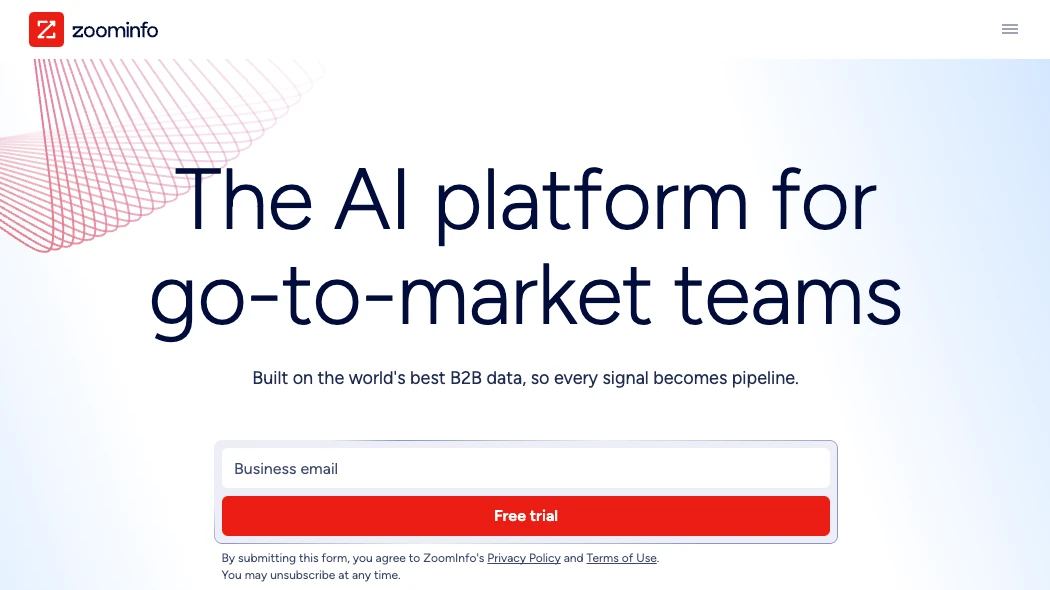
ZoomInfo is one of the largest databases in the industry. It stands out for combining deep firmographic and technographic data across North America, making it a popular choice for enterprise sales teams with large budgets.
Best for: Large sales teams that need deep account intelligence and can afford premium contracts.
Key strengths:
- Offers highly accurate technographic and company data across North American markets.
- Integrates smoothly with major CRMs to push account updates into your existing workflows.
- Captures detailed corporate hierarchy data to help you understand parent-subsidiary relationships.
Possible limitations:
- Requires expensive annual contracts that often price out smaller teams.
- Relies on a strict credit system for data exports, which can lead to unexpected overage fees.
Apollo
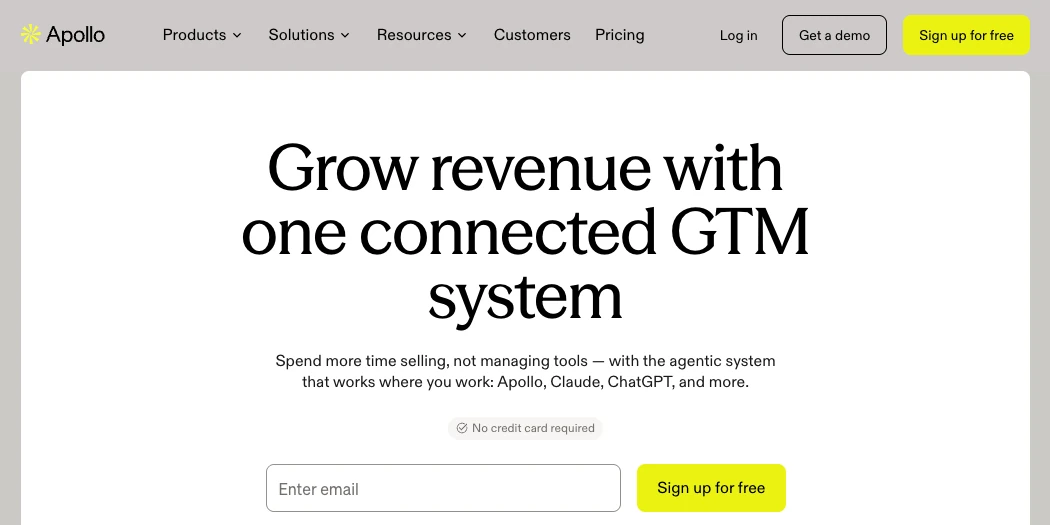
Apollo combines a massive B2B database with a built-in sales engagement platform, allowing you to find leads and email them from the same interface. It saves you from having to connect separate tools.
Best for: Fast-growing sales teams that need an affordable, all-in-one platform for high-volume outbound campaigns.
Key strengths:
- Offers a free tier that lets you test the data quality before committing to a paid plan.
- Combines firmographic and contact data with built-in email sequencing so you can launch campaigns quickly.
- Provides strong filters to uncover detailed company information, such as company size, funding stage, and technology stack, to build highly targeted account lists for precise market segmentation.
Possible limitations:
- Data coverage and email deliverability drop outside of core North American and major European markets.
- Operates on a strict monthly credit system that limits how much data you can export or sync to your CRM.
Clearbit (Breeze Intelligence)
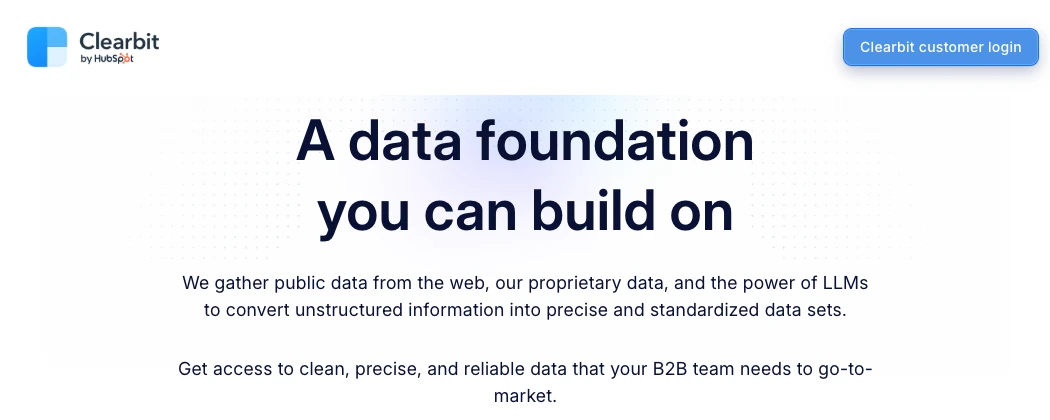
Now integrated into HubSpot as Breeze Intelligence, it automatically enriches records the moment a new lead enters your system. It turns simple email addresses into complete company profiles without manual data entry.
Best for: HubSpot users who want native data enrichment and website visitor identification built directly into their CRM.
Key strengths:
- Appends firmographic data to inbound leads in real time, allowing you to use shorter web forms.
- Monitors your website traffic to reveal which target accounts are browsing your pages.
- Provides industry and technographic data to help you score inbound leads automatically.
Possible limitations:
- Operates only within the HubSpot ecosystem, making it unavailable for teams using Salesforce or other CRMs.
- Runs on a credit-based pricing model that can become expensive if your inbound lead volume spikes.
Cognism
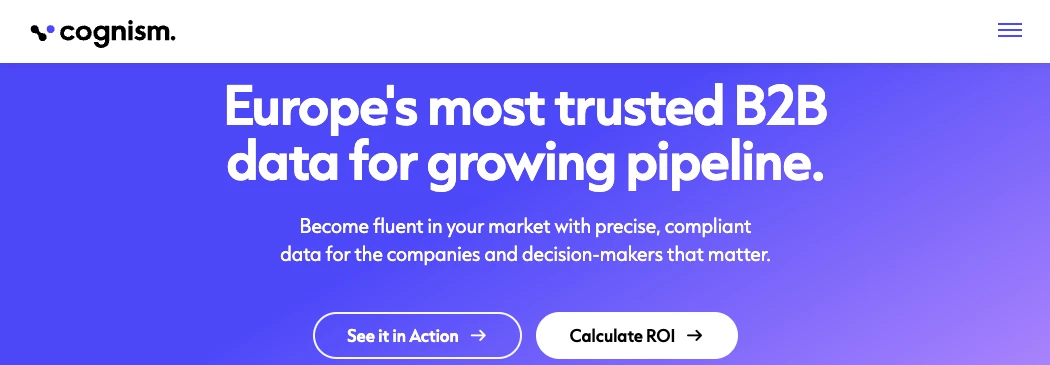
Cognism is known for its strong European company data and strict adherence to privacy laws. While it is famous for its compliant contact data, it also provides excellent firmographic coverage for teams targeting the EMEA region.
Best for: Sales and marketing teams that need accurate company data to build target account lists in European markets.
Key strengths:
- Provides strong firmographic coverage across European and UK markets, helping you map international accounts accurately.
- Integrates with major CRMs and marketing tools to automatically keep your company records up to date.
- Offers unrestricted data viewing on most plans, meaning you will not run out of credits just for browsing accounts.
Possible limitations:
- Offers slightly less granular firmographic and technographic filtering compared to larger US-based platforms.
- Charges premium pricing if you want to bundle their firmographic data with their manually verified mobile numbers.
Lusha
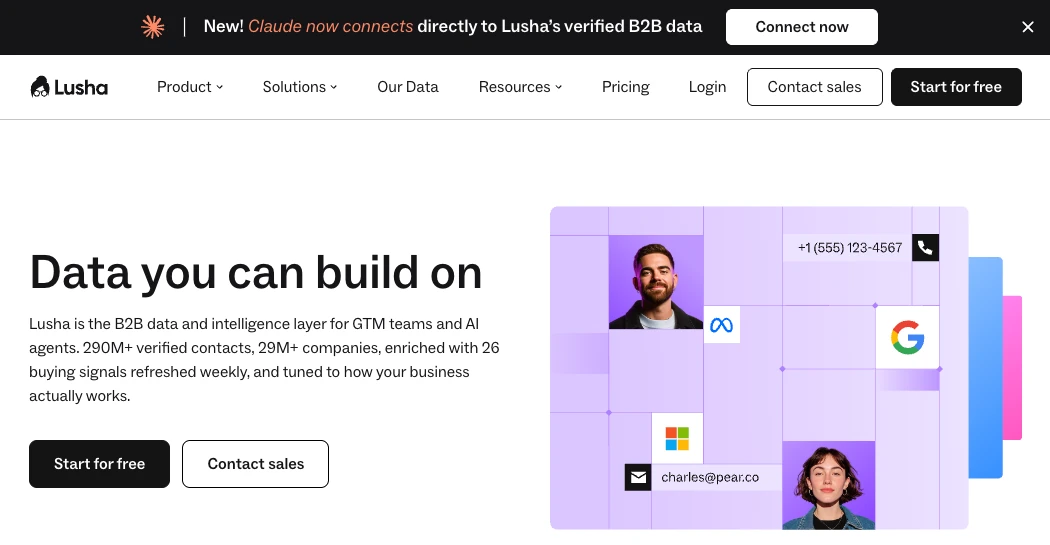
Lusha simplifies prospecting with a browser extension that overlays company and contact details directly onto LinkedIn profiles and company websites. It makes data extraction easy, allowing reps to find company information with a single click.
Best for: Sales teams that source heavily from LinkedIn and want an easy tool to uncover account information while browsing.
Key strengths:
- Offers a simple interface and browser extension that requires very little training.
- Provides firmographic buying signals, like funding events, headcount growth, and technology installs, directly within the platform.
- Connects with major CRMs and modern marketing platforms to push clean company data into your pipeline automatically.
Possible limitations:
- Lacks the deep corporate hierarchy mapping found in larger enterprise platforms.
- Consumes credits quickly if your team pulls bulk account lists, as the platform charges heavily for data exports.
People Data Labs
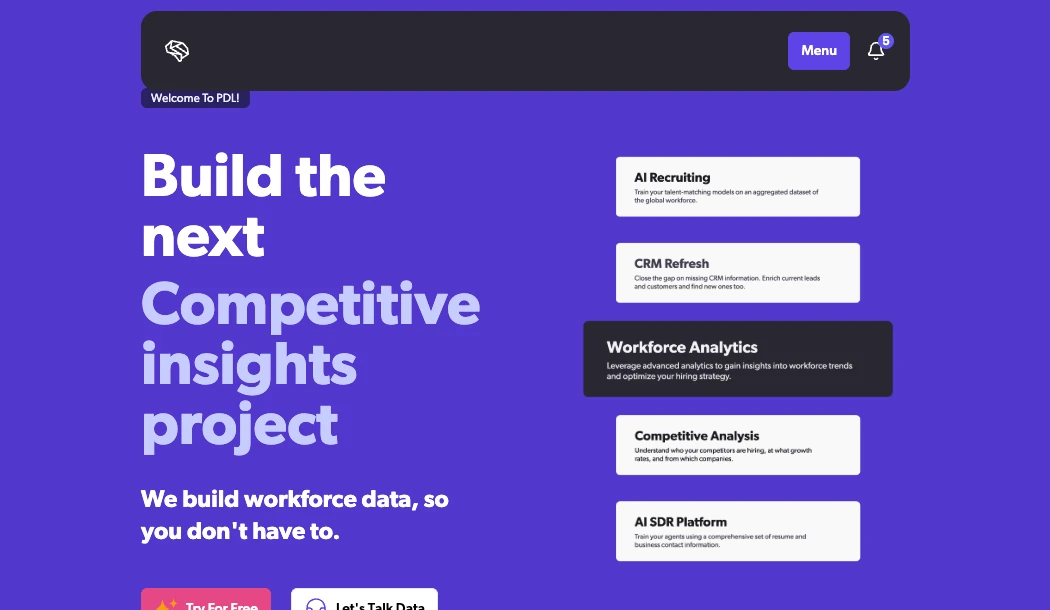
People Data Labs provides a massive, raw API that developers use to build custom data enrichment engines. It’s a popular choice for technical teams because it handles large volumes of data with high flexibility.
Best for: Engineering and data teams that want to embed raw firmographic and company data directly into their internal applications.
Key strengths:
- Grants API access to a massive B2B dataset that you can query and structure to fit your specific needs.
- Scales easily, allowing you to enrich millions of company and employee records simultaneously.
- Supports advanced use cases by providing detailed employee data, historical job postings, headcount changes, and company trajectories.
Possible limitations:
- Requires engineering resources to implement, as it operates strictly as an API rather than a ready-to-use software platform.
- Lacks a web interface, meaning non-technical sales reps cannot log in to run quick account searches.
Quick Comparison of the Best Firmographic Data Providers
Here is a quick summary of how the top providers compare. Using a dedicated platform is the only scalable way to keep your company records fresh, as manual research simply takes too much time.
| Provider | Best for | Database scale | Key differentiator | Pricing model |
|---|---|---|---|---|
| ZoomInfo | Enterprise teams | Massive, North American focus | Deep organizational charting | Annual contract |
| Apollo | Lean sales orgs | Large, global | Built-in engagement tools | Freemium/Seat |
| Clearbit | HubSpot users | Medium, highly curated | Native real-time enrichment | Credit-based |
| Cognism | European markets | Medium, verified | Deep European company coverage | Flat fee/Seat |
| Lusha | Social prospectors | Medium | Intuitive browser extension | Credit/Seat |
| People Data Labs | Engineering teams | Massive, API-first | Raw data flexibility | Usage-based |
How to Choose the Right Firmographic Data Provider
Choosing a firmographic data provider comes down to matching their specific capabilities to your workflow. You need to look beyond the marketing hype and evaluate how the platform supports your team.
Choose Based on Your Team Size and Budget
Tailor to your budget capabilities: freemium tools work well for startups, while enterprise contracts offer comprehensive intelligence for larger teams.
Regardless of your size, apply the “test 100 accounts” rule before signing a long-term agreement. Test a small batch of your hardest-to-reach accounts across a few vendors, as data quality varies wildly between platforms.
Choose Based on Your Geographic Market
Select a partner whose database aligns with your target territories; a platform that dominates North America might struggle in EMEA. If you operate in the European Union, you must ensure that the contact data bundled with your firmographics is GDPR-compliant.
To maximize coverage, many global organizations use a “waterfall” approach, cascading searches across multiple specialized providers based on the region.
Choose Based on Your Technology Stack
Accurate company data is useless if it doesn’t connect directly to your other workflow tools. Whether you use HubSpot, Salesforce, or an API, your provider must sync updates automatically to prevent manual data entry.
Strong integrations allow your marketing team to launch campaigns the moment a new target matches your ideal profile, which is why the best teams refuse to buy platforms without native synchronization.
Which Option Is Best for You?
The right data provider shapes your targeting quality, ensuring your sales team spends their time pitching the right companies instead of unqualified accounts.
When you supply your team with accurate firmographic data, they can create relevant messages based on a company’s true size, industry, and technology stack. Finding the right provider gives your team a clear tactical advantage.
- ZoomInfo. Best for enterprise organizations that need deep North American firmographics and complex corporate hierarchy mapping.
- Apollo. Best for growing sales teams that want to combine firmographic filtering with built-in email sequencing.
- Clearbit (Breeze Intelligence). Best for HubSpot users who want native company data enrichment built directly into their CRM.
- Cognism. Best for global teams building target account lists across European and UK markets.
- Lusha. Best for reps who want a lightweight browser extension to uncover company information while prospecting on LinkedIn.
- People Data Labs. Best for engineering teams that need a flexible API to build custom firmographic data applications.
Conclusion
No single data provider perfectly fits every business model or sales team. The best approach is to select a platform that fits your budget, target geographic region, and technical setup.
Accurate company data is essential for running targeted outbound campaigns that directly improve your business performance. Before you commit to a vendor, test a sample dataset to see if their data actually lives up to their sales pitch.