Best TripAdvisor Scrapers for Travel Data Extraction in 2026
Software comparisonsFind the best TripAdvisor scrapers in 2026 for both tech and non-tech users.

Kazys Toleikis
Key Takeaways
-
Bypassing anti-bot mechanisms is the biggest hurdle to web scraping TripAdvisor, so any tool you choose must support rotating IPs and JavaScript rendering.
-
Managed APIs cost more upfront, but remove the challenge of coding everything yourself. If you don’t have the necessary technical expertise, visual platforms offer a practical alternative.
-
To stay compliant, you must only extract public data, remove personal identifiers from user profiles, and limit your extraction speed to avoid overloading the servers.
TripAdvisor has a massive source of ratings, hotel rankings, and restaurant insights under one roof. While this data is highly valuable, extracting it is not that easy. To get the TripAdvisor data you need, be prepared to deal with dynamic content, JavaScript rendering, and aggressive anti-bot defenses that block amateur scripts.
Instead of building workarounds from scratch, this guide compares the top web scraping solutions for TripAdvisor data available, covering visual tools, cloud platforms, APIs, and custom code setups.
How We Chose the Best TripAdvisor Scrapers
Evaluating web scrapers for heavily protected sites requires looking past basic marketing claims. We focused our rankings on the core technical features that define whether a web scraping project succeeds or fails.
You need a tool that bypasses HTML parsing entirely. For TripAdvisor, the best tool is the one that extracts data directly from TripAdvisor’s internal JSON or GraphQL APIs, which provide a more stable connection.
While building the list, we focused on:
- Ease of use. The setup process should be straightforward.
- Data accuracy. The scraper must capture full text without missing or truncating any TripAdvisor data.
- Reliability. The platform needs to remain stable and functional even when TripAdvisor updates its layout.
- Pricing structure. Costs should scale logically based on the volume of requests you plan to send.
- Anti-detection. Provides options to rotate residential proxies and headers so you can minimize the chances of blocks.
- Output formats. The tool should deliver clean JSON or CSV files that integrate directly with your database.
- Support and scalability. Engineering support must be accessible when anything breaks or when you need help scaling.
These criteria help establish a line between valuable and useful web scrapers from others that may not be worth your time altogether.
Best TripAdvisor Scrapers Compared
Oxylabs
Oxylabs abstracts its entire scraping infrastructure behind a single endpoint. You simply submit a TripAdvisor URL, and their backend handles all the anti-bot bypassing to return the fully rendered page content.
Best for: Large engineering teams handling millions of daily requests who require maximum uptime and reliability.
Why it stands out: The platform completely eliminates the operational friction of managing proxies, browser fingerprints, and headers by offloading everything onto its own cloud servers.
Main advantages:
- New AI capabilities like OxyCopilot help you write code using plain English.
- The architecture scales up effortlessly to handle massive concurrency without dropping connections or lagging during peak traffic.
Key limitations:
- Unlike their pre-built APIs (which are plug-and-play), setting up a pipeline for custom sites like TripAdvisor still requires an initial time investment to define your extraction targets.
After configuring your parsing logic and routing, the extraction pipeline requires minimal ongoing infrastructure maintenance, allowing you to focus entirely on the data.
Bright Data
This platform combines a massive global proxy network with pre-built scraper templates. You can scrape TripAdvisor reviews and other data at scale simply by pasting a link into their dashboard.
Best for: Data analysts and research teams who need to gather data at scale but lack the engineering resources to build custom scrapers.
Why it stands out: It manages all backend routing and JavaScript rendering on its cloud servers, eliminating complex infrastructure setup.
Main advantages:
- Ready-made templates run instantly, completely bypassing coding delays.
- The system dynamically adapts to target page rate limits to maintain high success rates.
Key limitations:
- You’re restricted to the exact data points the template is pre-programmed to extract. If you need a highly specific, custom piece of information on the page that isn’t included in their standard output, you cannot easily modify the template to grab it.
Using these templates completely bypasses the need for headless browser configuration.
Apify
Apify hosts an open marketplace of cloud-based scripts called “Actors”. These let you run pre-configured scrapers without configuring a local server environment.
Best for: Cloud developers seeking flexible execution environments and precise pay-as-you-go pricing.
Why it stands out: Thanks to a vast marketplace of user-submitted scripts, you can usually find an Actor customized for your target page layout.
Main advantages:
- An active developer community quickly patches scripts when target sites update their layout.
- Built-in scheduling lets you easily automate recurring extraction runs.
Key limitations:
- Because you rely heavily on third-party developers for maintenance, an abandoned script can break your pipeline without warning.
The marketplace model provides an immediate solution for almost any extraction goal, provided the community maintains the script.
Octoparse
Octoparse replaces code with a visual interface. Users build data extraction workflows simply by clicking on screen elements.
Best for: Non-technical users who need to build and run data pipelines without engineering support.
**Why it stands out: **It provides non-technical users with a drag-and-drop workflow builder that provides real-time visual feedback during extraction.
Main advantages:
- The cloud-based engine runs continuously in the background. You can shut down your device while the servers gather data.
- It automatically handles basic pagination to scrape multiple TripAdvisor review pages in a single run.
Key limitations:
- Complex infinite scrolls or highly dynamic nested elements frequently confuse the visual engine. This often causes skipped fields if the layout shifts during a run.
The visual interface streamlines debugging by making it immediately obvious if your logic selects the wrong information.
Custom Selenium Solution
Building a custom Selenium script requires writing code to control a headless browser. This approach mimics human interactions like scrolling and clicking with high precision.
Best for: Software engineers who require complete pipeline visibility and prefer open-source frameworks.
Why it stands out: Because you own the codebase, you can adapt the script to capture obscure data points that pre-built solutions miss.
Main advantages:
- The foundational framework is free. Your overhead is strictly limited to basic proxy and hosting costs.
- You have complete flexibility to tweak timing delays and request headers to bypass specific bot detection algorithms.
Key limitations:
- You are entirely responsible for maintenance. Whenever the target site updates its layout, you must spend time fixing broken selectors.
While building from scratch requires more effort, it guarantees complete control over every point of failure.
Quick Comparison Table
Your choice comes down to a simple trade-off: spending engineering hours to maintain a custom script, or paying for a fully managed scraper to save time.
| Tool | Best for | Main advantage | Main limitation |
|---|---|---|---|
| Oxylabs | Enterprise teams | Zero infrastructure management | Premium enterprise pricing |
| Bright Data | Data scientists | Pre-built, robust templates | Aggressive bandwidth costs |
| Apify | Cloud developers | Massive actor marketplace | Reliance on third-party updates |
| Octoparse | Non-technical marketers | Visual drag-and-drop interface | Struggles with infinite scroll and dynamic elements |
| Custom Selenium | Control-focused engineers | Complete pipeline control | High maintenance burden |
The Role of Proxies in TripAdvisor Scraping
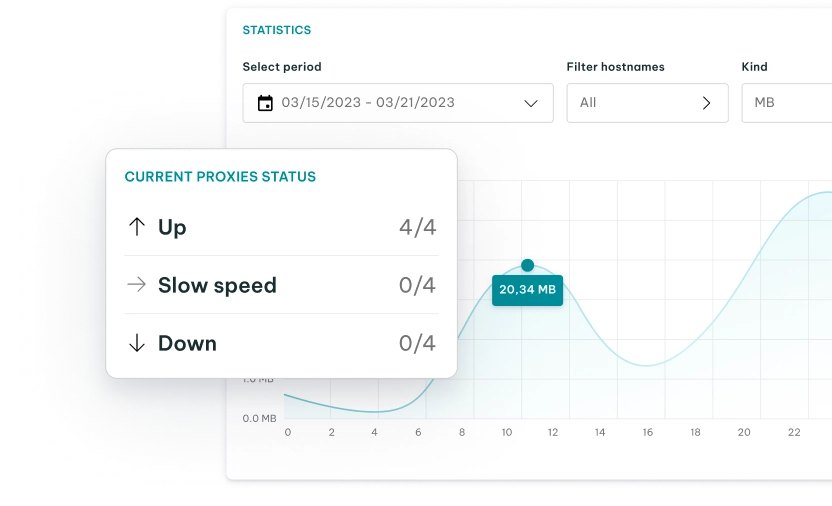
TripAdvisor uses sophisticated behavioral analysis and rate-limiting protocols. If a single IP address sends too many requests, the platform will quickly block it. That’s why integrating a proxy rotation strategy is the only way to maintain reliable access.
Residential proxies are highly preferable to datacenter IPs because they use addresses from real internet service providers. This makes your bot appear as normal human traffic and allows you to route requests through specific cities to extract localized hotel pricing.
While no system is flawless, routing your requests through a high-quality residential proxy network drastically reduces the risk of blocks and keeps your data pipeline stable.
Global Pool, Precise Targeting, Zero Contracts
Premium Residential Proxies
Legal and Compliance Considerations
Extracting public and non-personal data like hotel pricing is generally legal in terms of the law, considering that courts have ruled in favor on multiple occasions. However, TripAdvisor’s Terms of Service explicitly prohibit automated collection, which inherently renders the general “legality” theoretically useless.
Scraping long-form TripAdvisor reviews at scale, however, creates serious copyright exposure. Additionally, you must scrub all personally identifiable information (PII) from your datasets to comply with GDPR and CCPA regulations.
To minimize legal liability, strictly limit your request rates to avoid degrading TripAdvisor’s server performance, and only extract the specific data points your pipeline requires.
Which TripAdvisor Page Scraper Is Best for You?
- Oxylabs is the top choice for enterprise teams that require maximum uptime for massive, ongoing data pipelines.
- Bright Data provides the strongest pre-built templates for extracting data at scale without touching backend configuration.
- Apify is ideal for running cloud-hosted scripts on a flexible budget, thanks to its extensive marketplace of ready-made Actors.
- IPRoyal is the best bridge tool if you already have your own parsing scripts but need a reliable API to handle CAPTCHA and IP rotation.
- Octoparse is the best fit for marketers and non-technical users who require a purely visual, drag-and-drop interface.
- Custom Selenium remains the most viable option for engineers prioritizing complete pipeline control and zero software licensing fees.
FAQ
What’s the best TripAdvisor scraper for non-developers?
Octoparse is the best option. It provides a visual interface where you simply click the data points you want to extract.
Can I scrape data from TripAdvisor without coding?
Yes. Visual extraction platforms like Octoparse allow you to build workflows directly in your browser.
Why do TripAdvisor scrapers need to handle JavaScript rendering?
TripAdvisor loads most of its valuable data asynchronously. If you send a basic HTTP request without rendering JavaScript, the server will return empty HTML containers instead of the target data.
Do I need proxies to scrape data from TripAdvisor?
Yes. If you request thousands of pages from a single IP address, TripAdvisor will block you immediately. Rotating your requests through a proxy network is mandatory for any serious web scraping project.
Is it legal to scrape TripAdvisor data?
Extracting public factual data like pricing and ratings is generally legal. However, you must comply with privacy laws (like GDPR) and avoid reproducing copyrighted TripAdvisor reviews at scale.