Web Scraping for AI Training: Sources, Methods, and Use Cases
AIExplore the top sources, extraction methods, and proxy infrastructure needed to scrape web data for AI training.


Eugenijus Denisov
Key Takeaways
-
Continuous extraction of public web data provides the essential context required for developing sophisticated machine learning models.
-
Deploying headless browsers and rotating residential IPs handles the complexities of modern site architectures and security defenses during machine learning data gathering.
-
Rigorous filtering and ethical source tracking prevent significant legal liabilities associated with unauthorized machine learning training material.
Building foundational models relies heavily on gathering vast amounts of raw text and media from the open internet. Executing web scraping for AI training provides the underlying fuel that dictates how these systems ultimately perform when interacting with human users.
You set up a pipeline to continuously ingest pages, converting messy HTML into clean text files. This initial web scraping phase establishes the underlying knowledge base of the resulting network, setting the stage for later fine-tuning to shape its functional capabilities.
Why Web Scraping Matters for Training AI Models
Model quality depends heavily on the volume and diversity of ingested information, making web data the primary bottleneck for developers pushing the boundaries of generative systems. Curated repositories often lack the messy, edge-case interactions found in uncontrolled environments.
Gathering public information through aggressive data collection gives models a more realistic understanding of human communication patterns. Modern architectures often require trillions of tokens to reach baseline competency. To put that in perspective, feeding a large language model demands tens of terabytes of raw text gathered continuously over several months.
You need these massive inputs to drive the complex weight adjustments within advanced machine learning architectures. Success in training artificial intelligence models relies heavily on balancing the sheer volume of varied context you ingest with rigorous quality filtering before computing budgets run out.
Common Use Cases for AI Training Data
Various specialized applications rely directly on robust web scraping operations to function properly. Language systems, coding assistants, and vision networks all require distinctly structured data inputs pulled from disparate sources across the web.
A lot of developers focus heavily on natural language processing tasks involving conversational nuances and dialect variations. Specialized industries have their own requirements. Hedge funds archive historical financial statements and decades of market research to train specialized financial prediction models, while legal tech companies ingest vast repositories of court registries to build foundational legal language architectures.
Accumulating vast repositories of industry-specific reports and dense consumer behavior narratives builds the necessary context for natural language processing. These textual pipelines ultimately feed the foundational weights and biases of specialized machine learning models.
Top Web Targets for AI Training Data
Target selection dictates the quality of the resulting datasets, prioritizing domains with high update frequencies and rich text. You want public portals containing extensive, easily accessible information. Pulling from well-structured directories simplifies the web scraping process immensely.
Reddit and Long-Form Forums
User-generated communities offer unparalleled access to authentic human dialogue and debate. Parsing these threads gives machine learning algorithms exposure to sarcasm, niche terminology, and organic conversational flow.
Finding specialized sub-communities allows engineers to fine-tune systems on specific domains like medicine or engineering. Digesting this raw linguistic material provides the conversational foundation, necessitating extensive post-training alignment to ensure the final product communicates safely and coherently.
X (Twitter) and Real-Time Microblogs
Archiving massive historical dumps from short-form platforms builds the baseline understanding of human colloquial and cultural context. This vast repository of rapid-fire text proves crucial for developing foundational models capable of parsing sentiment analysis and informal dialogue.
Dealing with the strict rate limits on these platforms requires distributing the data collection workload across thousands of distinct connection points.
Instagram and Visual Social Platforms
Extracting high-resolution images alongside structured alt-text from broader web crawls provides the reliable semantic pairs required for teaching foundational vision models.
Targeting specific visual social networks to supplement this data with specialized imagery forces engineers into constant battles with severe anti-bot defenses, fingerprinting algorithms, and behavioral tracking mechanisms.
Bypassing these hurdles breaks often, requiring constant script updates.
Stack Exchange, GitHub, and Technical Q&A
Teaching code assistants requires web scraping billions of lines of syntax, commit messages, and developer discussions. These repositories offer highly structured logic and problem-solving patterns crucial for advancements in artificial intelligence .
Feeding these examples into deep machine learning pipelines enables the generation of syntactically correct code snippets in numerous programming languages.
YouTube and Video Platforms
Extracting multimodal content from video hosting sites provides rich layers of synchronized audio, visual, and textual context. Developers typically target the auto-generated transcripts and uploader metadata during their web scraping runs. Matching spoken words with visual frame changes helps multi-modal systems understand temporal relationships.
News, E-commerce, and Review Sites
Pulling factual articles and product specifications helps reduce the tendency of generative systems to fabricate information.
Targeting sites that utilize structured data formats like JSON-LD makes parsing attributes significantly easier for extraction scripts. Executing consistent web scraping across trusted news outlets establishes a reliable baseline of historical facts and current events.
How Web Scraping Feeds AI Training Workflows
The pipeline moves from discovery to extraction before reaching the formatting stage, where systems package the cleaned text into structured archives awaiting tokenization during the actual training phase. Managing the initial data collection involves distributing millions of HTTP requests across vast server networks.
You filter out low-quality pages and deduplicate identical content to prevent the models from overfitting on repetitive spam. Dealing with this filtering phase consumes massive amounts of compute.
Many organizations build domain-specific datasets tailored for highly specialized web scraping for AI training tasks. This extraction workflow operates continually to build massive historical archives for upcoming discrete training runs, relying on separate external retrieval systems to provide active models with recent worldly context.
Technical Methods for Web Scraping
Extracting raw HTML via basic GET requests remains the most efficient approach for parsing simple, static text directories. Relying on traditional scraping methods requires minimal overhead and processes thousands of pages per second on modest hardware.
Engineers still rely heavily on traditional web scrapers when targeting older academic archives and plaintext repositories. These traditional scrapers struggle when modern JavaScript frameworks come into play.
Bypassing the massive memory footprint of headless browsers, data engineers reverse-engineer the underlying XHR requests to pull structured JSON directly from backend APIs. Reserving full DOM rendering strictly for heavily obfuscated targets preserves server resources and maintains high extraction velocity.
When targeting these fortified endpoints, waiting for network requests to settle ensures dynamic content populates the DOM tree, representing a necessary compromise that drastically increases the memory footprint of the localized extraction architecture.
Teams leverage LLMs asynchronously to generate resilient parsing logic or structure complex textual anomalies post-crawl, keeping the active network collection loop confined to highly optimized deterministic scripts to prevent catastrophic latency. Using AI-powered web scraping tools allows scripts to locate target fields based on semantic meaning rather than rigid CSS paths.
Deploying AI-powered scrapers reduces the maintenance burden of constantly adapting to layout changes.
Overcoming Scale and Blocking Challenges
Distributing requests across massive IP pools prevents target servers from identifying and terminating your extraction workers. Masking the origin of your web scraping scripts requires careful rotation strategies and session management.
Routing traffic through residential connections masks the network origin, leaving the necessary simulation of human biometrics to sophisticated browser automation frameworks. Finding reliable infrastructure is critical, so setting up residential proxies provides access to millions of responsibly sourced IPs globally for seamless data collection.
Global Pool, Precise Targeting, Zero Contracts
Premium Residential Proxies
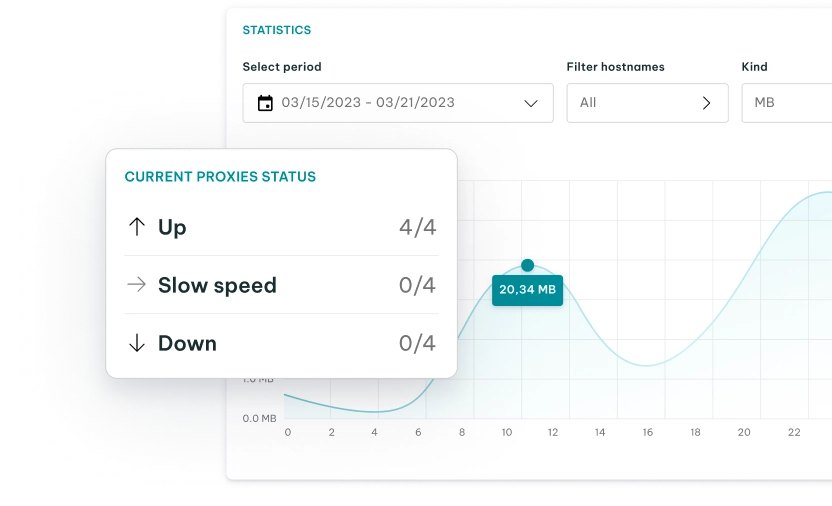
Managing a high-volume AI-powered web scraping tool demands constant tuning of request headers and TLS fingerprints to match common browser profiles. Bypassing geographic restrictions utilizes the proxy network, while handling complex dynamic content loading demands significant local memory allocation to execute headless browser engines.
Even the most sophisticated traditional scrapers will fail immediately without proper IP masking.
Legal, Ethical, and Governance Considerations
Navigating digital privacy laws requires strict adherence to regulations governing personal information processing. Teams dump raw web extractions directly into massive data lakes, running rigorous PII masking protocols during subsequent offline batch processing phases to maintain high velocity during the active data collection cycle.
Maintaining compliance with frameworks like GDPR and CCPA dictates the boundaries of modern data collection . Establishing a comprehensive source registry helps organizations track provenance during post-collection data analysis.
Handling massive, unfiltered large-scale datasets introduces significant liability if copyrighted materials end up memorized and reproduced by the final model.
Conclusion
Extracting knowledge from the open internet remains the absolute foundation of modern technological advancement. Running efficient extraction pipelines determines the breadth of the resulting semantic knowledge base, while internal attention mechanisms and targeted reinforcement learning phases govern the eventual reasoning capabilities of the network.
The underlying AI-powered web scraping infrastructure determines how effectively these systems understand and replicate human knowledge.
FAQ
Is it legal to use scraped web data to train commercial AI models?
The legality of utilizing web scraping for commercial development currently sits in a complex gray area heavily dependent on regional copyright laws and specific platform terms of service.
How much scraped data do I need to train a useful AI model?
Developing a foundational system from scratch demands tens of terabytes of aggressively filtered text, necessitating extensive data engineering infrastructure to process massive unstructured web crawls down to a usable dataset.
Fine-tuning existing machine learning models on specific domains requires significantly less volume, often just a few gigabytes of highly curated text.
What infrastructure do I need for large-scale scraping?
Operating at volume requires distributed server clusters, message queues for task management, and massive residential proxy pools to sustain continuous web scraping.
Many teams deploy specialized web scraping frameworks designed to handle asynchronous requests and automatic retries.
How do I prevent bias when scraping web data for AI training?
Auditing your target sources ensures your initial data collection phase doesn’t overrepresent specific demographics or cultural viewpoints. Deploying specialized heuristic classifiers alongside rigorous deduplication algorithms helps identify and filter out toxic or statistically anomalous documents long before initiating the foundational training loops.