What Is RAG in AI? How Retrieval-Augmented Generation Works
AIWhat RAG means, the three steps it runs on, how it compares to fine-tuning, whether long context has replaced it, and where the documents come from.

Marijus Narbutas
Key Takeaways
-
RAG reduces AI hallucinations by forcing the model to read trusted documents before answering.
-
Building a solid RAG implementation requires good text chunking, strict access controls, and clean data extraction.
-
RAG searches large, constantly changing databases much faster and cheaper than stuffing everything into a massive AI context window.
Generative large language models often state false information with total confidence because they stop learning after their training cutoff date and have no grounding outside of that period.
Retrieval-Augmented Generation solves this by connecting the AI to external data sources the moment you ask a question. Instead of relying on memorized patterns, the AI looks up actual documents to build its answer.
It lets developers avoid the massive cost of retraining a model every time a company policy or product specification changes.
What Does RAG Mean in AI?
A RAG architecture pairs a regular language model with a search engine connected to various data sources . It fetches relevant documents and inserts them into the prompt before the AI generates an answer.
If you ask a standard AI model about a company’s privacy policy, it fails because it only knows its static training data. Adding a search step fixes this by finding exactly what the AI needs to read right before it starts writing.
A RAG model is not a brand new AI built from scratch for natural language processing; rather, it enhances existing AI applications. It is simply this connected pipeline of search and text generation.
How Does RAG Work? The Three Steps Explained
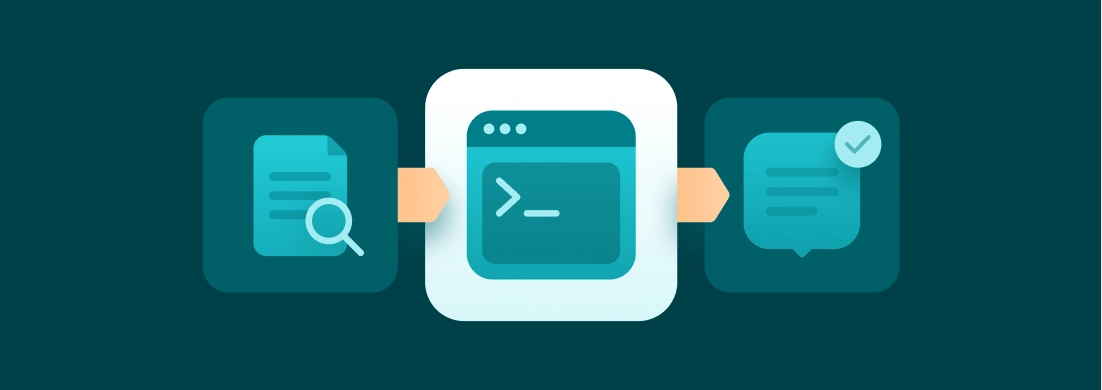
The retrieval phase begins when a user submits a query. The system uses semantic search across connected vector databases to find the most relevant information.
During the augmentation step, the software combines those fetched documents with the original question to build a detailed prompt.
In the generation phase, the system passes this augmented prompt to the AI. The AI then writes an answer based directly on the provided facts, which is ideal for knowledge-intensive tasks that require contextually relevant responses.
Some guides expand this process to four steps by including an initial data preparation phase. A five-step version might also add query processing at the beginning and source citation at the end.
Is ChatGPT a RAG Model?
The base AI models powering ChatGPT rely on their original training data to answer questions. However, the ChatGPT app you use today frequently acts as a RAG system. It automatically searches the web for current information or reads the specific documents you upload.
Instead of making you manually turn on a browsing mode, it pulls in information from external data sources to help build its answers.
Why RAG Matters for AI Accuracy
An AI system using RAG dramatically reduces hallucinations because the AI relies on relevant resources instead of guessing from its training data. This setup lets companies build safe internal chat tools that securely access internal data for their employees. Private data stays secure and never leaks into the public training data of the base AI model.
Keeping the AI system current is also simple. When a policy changes or news breaks, a developer just adds a new file to the database. Updating these records costs a fraction of a cent, while retraining an entire AI model costs millions of dollars.
It makes RAG the most practical way for businesses to get accurate AI answers without massive engineering bills.
RAG Architecture: The Components of a RAG Pipeline
| Component | Role |
|---|---|
| Document store | Holds raw text files, PDFs, and web data before processing |
| Embedding model | Translates text into numbers so the system can measure how closely concepts match |
| Vector database | Stores these numbers and runs fast searches to find relevant information |
| Retriever | Takes the user query and fetches the best matches from the database |
| Reranker | Double-checks the initial semantic search results and moves the best matches to the top |
| Language model | Reads the retrieved data and writes a clear answer based on those facts |
| Orchestration layer | Manages the data flow between the user, database, and AI using tools like LangChain |
Pipelines usually rely on vector databases like pgvector, Pinecone , or Weaviate, managed by orchestration tools like LangChain or LlamaIndex. Preparing data for these systems requires careful text chunking.
If the text blocks are too big, the search loses precision. If they are too small, the text loses its original meaning. Changing the embedding model later is a massive commitment. It forces the engineering team to reprocess the entire database from scratch.
How to Build a RAG Knowledge Base
Most tutorials assume you already have a clean folder of text files. In reality, building a RAG system often means scraping public websites for data. When collecting this data, an HTTP 429 error usually means your scraper is running too fast.
Adding a pause or exponential backoff to your script will often resolve this. However, a 403 error or a Cloudflare challenge means the target server blocked your bot outright. Other sites might block you based simply on your server location.
Additionally, many modern websites show blank screens unless you use a headless browser to execute JavaScript.
Keeping the database updated is another major hurdle. You must track and remove deleted documents so the AI stops citing obsolete pages. Teams have to choose between writing complex logic to only update modified files or rebuilding the whole index from scratch.
Since strict rate limits often make full daily re-crawls impossible, updating only the changed files is usually the better choice.
RAG vs. Fine-Tuning vs. Prompt Engineering
| Approach | What it does | When to use |
|---|---|---|
| Prompt engineering | Shapes behavior and output format without adding new facts | Try this first to fix tone and structure before writing complex code |
| Fine-tuning | Adjusts model weights to learn a specific writing style, format, or niche vocabulary | Use this when the AI struggles to match your exact brand voice or specific data formats |
| Retrieval-Augmented Generation | Keeps facts in an external database and adds them to the prompt when a user query is received | Use this for answering questions about private documents, current events, or large databases |
Start with prompt engineering and RAG techniques before moving to complex machine learning methods. This combination is cheap, fast, and easy to update.
You can add fine-tuning later to perfect the tone once your system reliably gets the facts right. Ultimately, these three methods work best together rather than as competing choices.
Is RAG Obsolete? RAG vs. Long Context Windows
Massive context windows in modern large language models have definitely replaced RAG for some tasks. If you have a relatively small and fixed set of documents, putting them directly into a long context window is often easier. Thanks to modern prompt caching features, the AI can remember that document set across a conversation, making it cheap to reuse.
However, RAG still wins when your vector databases are massive, change constantly, or require strict user access controls. Sending an entire corporate library into an AI prompt for every single question will still generate massive API bills. RAG avoids this by searching your database first and only sending the exact paragraphs needed to answer the question.
RAG Limitations and Common Mistakes
A good RAG system reduces hallucinations, but the AI can still misread or misunderstand the documents you feed it. Even with perfect results from the search engine, the final answer depends entirely on the model’s reading comprehension.
Engineers also frequently ruin their search quality with bad text chunking. Cutting paragraphs in half destroys the context and hides the best answers from the database. On the architecture side, chaining too many tools together or failing to use a standard Model Context Protocol creates bloated pipelines that are slow and expensive to run.
Maintenance and security present another major challenge. If you do not update the index, the AI will confidently give outdated answers. If you skip access controls, clever users can trick the system into revealing private files they should not see.
Scraping third-party websites opens the door to data poisoning. If a source website gets hacked or manipulated, your AI might start repeating those malicious instructions directly to your users.
FAQ
What is the difference between RAG and large language models?
Large language models are the base text generators. RAG is the system that connects that generator to an external database. An LLM alone relies on its original training data to answer questions, while RAG forces the AI to read specific documents before it writes a response.
What is the difference between RAG and fine-tuning?
Fine-tuning actually changes the internal weights of the AI model to teach it a new style or format. RAG leaves the AI model untouched and simply hands it relevant documents to read right before answering a question.
Does RAG eliminate hallucinations?
No, but it drastically reduces them. RAG gives the AI factual documents to read, but the final answer still depends on the model understanding those texts. The AI can still misread the provided data, mix up facts, or draw the wrong conclusions.
Is RAG still needed with long context windows?
Yes, especially for massive or constantly changing databases. Long context windows combined with prompt caching and a standardized Model Context Protocol are great for analyzing a few large documents at once. However, loading your entire internal data and company database into an AI prompt for every single question remains too slow and expensive. RAG solves this by only sending the exact paragraphs needed.