Zero-Shot Learning: How It Works, Examples, and Use Cases
AILearn what zero-shot learning is, how it works, how it compares to few-shot learning, and discover practical AI use cases with real-world examples.

Eugenijus Denisov
Key Takeaways
-
Zero-shot learning allows AI models to classify data or perform tasks without requiring any specific training examples for those exact target categories.
-
The technology works by mapping unseen data labels to a shared dataset that the model already understands.
-
By bypassing the traditional data-labeling phase, businesses can deploy AI solutions faster and significantly lower data preparation expenses.
Artificial intelligence is getting smarter and more widespread, with businesses and everyday consumers using various AI tools for everyday activities. A major problem with many machine learning models is that they require large amounts of clean data to recognize patterns.
At least this was the case until zero-shot learning. This new development in AI model training allows models to successfully handle entirely new tasks or classify data into categories they have never explicitly seen during training.
But how does it work, exactly, and how can zero-shot learning identify and organize data without training? This article will cover all you need to know about zero-shot learning, main examples, and real-world applications.
What Is Zero-Shot Learning?
Zero-shot learning (ZSL) is a machine learning setup in which a model can recognize objects or classify text from classes not seen during training. That’s why it’s called zero-shot learning: the ‘zero’ means the model doesn’t rely on previous examples of the specific target categories before it’s asked to identify them.
For example, a business wants to build an automated content moderation tool for an ecommerce platform. However, passing trends come and go, and as a result, new slang terms are emerging that the AI moderation tool can’t recognize.
To combat this, the people working on this moderation tool would have to manually enter hundreds of examples, tag them, and run additional model training. Or they could choose zero-shot learning, which can immediately understand and classify this new category by reading a brief textual definition of what it represents.
How Does Zero-Shot Learning Work?
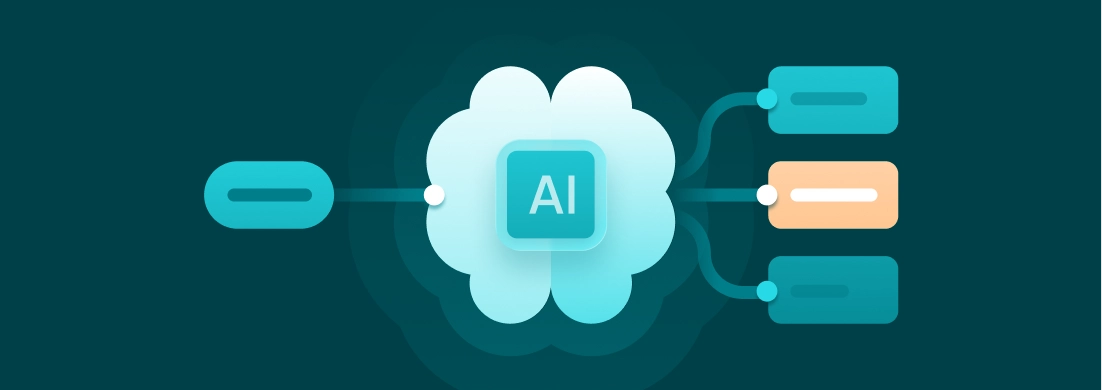
Artificial intelligence (AI) currently has two domains – the data the model was originally trained on and the new categories you want it to identify. To bridge the gap between what it knows and what it doesn’t, the model relies on an intermediate layer called a semantic embedding space.
During a model’s pre-training phase, it learns deep mathematical relationships among words, concepts, images, and their associated attributes. Instead of seeing words or objects as isolated items, it views them as coordinates in a massive conceptual map.
Now, zero-shot learning models follow the same data handling, but process it differently. Here’s a quick rundown:
- Attribute extraction: The model breaks down the target category into its core semantic attributes or text descriptions.
- Vector space mapping: It projects these descriptive attributes into the shared semantic embedding space, locating exactly where this new concept fits relative to the concepts it already understands.
- Similarity calculation: When a zero-shot learning model encounters unfamiliar data, such as a new image, it analyzes its features, projects them onto the same semantic map, and matches them to the closest defined target.
Zero-Shot Learning Example
Let’s say a fast-growing consumer electronics company wants to monitor customer reviews across different online marketplaces to catch and flag product defects or shipping issues.
If they were to use traditional machine learning (ML), the company would have to hire data annotators to read through thousands of existing reviews and tag them with labels like [battery issue], [broken screen], [late delivery], etc.
With zero-shot learning, the company can skip the labeling phase entirely and feed a pre-trained zero-shot model raw, unlabeled reviews, then simply provide a clean list of candidate strings to check.
- Example review: “The device arrived three days late, and when I opened the box, the charging cable was completely frayed.”
- Output provided by a ZSL model: [Logistics delay], [hardware defect].
Structural Breakdown: Traditional vs. Zero-Shot Learning
| Operational element | Traditional machine learning | Zero-shot learning |
|---|---|---|
| Data requirements | Requires thousands of labeled examples per class | Requires zero examples of the target classes |
| Setup time | Weeks to months spent on data collection and labeling | Instant, relies on writing natural language labels |
| Adaptability | Rigid, requires complete retraining to add a new category | Flexible, new categories can be added instantly |
| Computational overhead | High initial training costs for customized models | Low deployment overhead, utilizes pre-trained base models |
| Best used for | Static, hyper-accurate, niche industrial applications | Dynamic environments, fresh web data, and rapid prototyping |
Zero-Shot Learning vs. One-Shot vs. Few-Shot Learning
Zero-shot learning is actually one part of a broader branch of machine learning called n-shot learning. In addition to zero-shot, there’s also one-shot, few-shot, and supervised learning, all of which follow the same principle but are provided with different amounts of data during training.
| Learning type | Number of examples | Primary technical objective | Use case | When to use |
|---|---|---|---|---|
| Zero-shot learning | 0 examples | Rely entirely on pre-existing semantic knowledge | Real-time classification of highly dynamic web data streams | Categories change constantly, or you need to deploy immediately |
| One-shot learning | 1 example | Recognize a category based on a single reference point | Face verification systems (matching a live passport scan to one photo) | Tasks that require a specific format, tone, or subjective style |
| Few-shot learning | A small handful (typically 2 to 10) | Give context to complex, subtle, or highly nuanced tasks | Classifying specialized legal documents with niche formatting requirements | |
| Supervised learning | Thousands of examples | Maximize precision for a locked-down, static set of categories | High-stakes medical diagnostics or automated financial fraud detection | High-stakes business functions where data categories remain unchanged, and accuracy is essential |
Zero-Shot Learning vs. Zero-Shot Prompting
Zero-shot learning and zero-shot prompting are two distinct actions within the same process. The learning part refers to a model’s design, allowing it to recognize and map new classes. Prompting is the execution phase that involves interacting with large language models (LLMs) like GPT-4 or Claude to request that they perform a task.
Zero-shot prompting is actually much more commonly used than you’d think – you’ve probably used it yourself. Whenever you write a prompt into an AI tool without providing an explanatory example first, you’re using zero-shot prompting.
Zero-shot prompt example
Prompt: Classify the following customer email into one of these categories: [Refund Request], [Technical Bug], or [Sales Inquiry]. Do not provide any introductory text, give only the category name.
Customer email: Hey, your checkout page keeps freezing up every time I try to input my credit card details. Can someone fix this?
Output: Technical Bug
What Is Zero-Shot Classification?
Zero-shot classification is the most widely used practical subfield of zero-shot learning. It describes the process of giving a model data, like a text document, a social media comment, an ecommerce product title, or an image, and asking it to assign class labels.
Since zero-shot learning is based on flexible language comprehension, it's understandably become popular for building business workflows. Some of the most common use cases include:
- Text classification & topic detection: Sorting massive collections of internal corporate documents or incoming news feeds into highly granular, shifting topic buckets.
- Sentiment analysis: Tracking consumer reactions to a sudden product launch or marketing campaign by defining custom labels.
- Support ticket routing: Instantly triaging high volumes of inbound customer service inquiries and routing them to specialized support squads without human intervention.
- Web data organization: Structuring unstructured data points harvested from the web into standardized, neat, searchable databases.
Real-World Use Cases of Zero-Shot Learning
NLP and Text Classification
In the case of natural language processing (NLP), zero-shot learning can help with building custom text classifiers. Many HR departments use it to mass-scan resumes, extracting relevant information to determine whether applicants' skills match those required for specific job roles. Legal teams scan vast amounts of documents and contracts to identify client-unique clauses, liabilities, and other specifics.
Web Data Analysis
The internet is an unorganized, chaotic wilderness of information. Cybersecurity and web data analysis companies that monitor global data use zero-shot classification to bring order to this chaos.
When scraping content from public forums, news outlets, or social networks, zero-shot learning allows businesses to automatically tag posts with relevant industry keywords, brand names, and intent signals on the fly, turning raw HTML text streams into clean, actionable intelligence assets.
Customer Support Automation
Reliable customer support is the backbone of modern customer experience. The only problem is that this also means handling numerous tickets daily. Zero-shot learning systems can read inbound tickets, extract the core intent, and instantly group them into different action categories.
AI Training Data Preparation
Interestingly, zero-shot learning is one of the best tools available for scaling up traditional supervised learning models. When building datasets for specialized models, data engineering teams use zero-shot models as a first-pass auto-labeler to scan raw files, classify them, and pre-sort that data without manual input.
Computer Vision
Computer vision relies on trained multimodal frameworks like contrastive language-image pre-training (CLIP). Zero-shot learning helps autonomous systems, inventory cameras, and security networks to identify rare objects or risks they have never seen in a training environment.
For instance, a warehouse inventory robot can successfully locate and count a brand-new product package line simply by reading a text description of the box's design and colors.
Benefits of Zero-Shot Learning
| Automated data labeling | Eliminates manual data entry, tagging, and labeling, allowing teams to focus resources on other tasks. |
|---|---|
| Instant deployment | Zero-shot learning models are ready to use right away without requiring training. |
| Operational flexibility | ZSL models can be quickly updated with new information instead of retraining the entire model. |
| Reduced costs | No need to spend additional resources on data annotation or preparation. |
Limitations of Zero-Shot Learning
| Reduced accuracy | Zero-shot learning is fast and flexible, but it may not be accurate enough for tasks that require near-perfect precision. |
|---|---|
| Label choice ambiguity | The labels you choose affect the results, so even small wording changes can impact accuracy and may require testing. |
| Domain limitations | ZSL models can struggle with highly specialized topics because they are trained on general knowledge. |
| Requires data validation | Zero-shot model outputs should always be tested and reviewed for accuracy. |
How Zero-Shot Learning Connects to Web Scraping and Fresh Data
Data is gold, and one of the main ways to access it today is with web scraping. With it, businesses can monitor external web data, like ecommerce marketplace prices, competitor content releases, consumer reviews, and global market trends.
This is where zero-shot models shine. When connected to a live web scraping data feed, a zero-shot model acts as an automated, intelligent filter that instantly parses, structures, and categorizes unstructured public web data.
However, there are different types and formats of publicly available data, and not all of it can be accessed. That's why many web scraping teams use residential and data center proxies to manage data collection more easily, particularly across other geographic regions.
How to Use Zero-Shot Learning Effectively
Zero-shot learning can offer great opportunities for utilizing AI benefits faster, but it's not a one-size-fits-all solution, and it certainly comes with significant considerations. If you're thinking about integrating ZSL into your business workflows, here are a few best practices to keep in mind:
- Write accurate data labels: Treat your classification labels like mini-prompts. Instead of using generic single words like service, use clear, descriptive phrases like customer service quality inquiries.
- Use hierarchical classification: If you have multiple categories, break down your tasks into stages. Run an initial categorization to separate text files from visuals, then a second categorization to identify more definitive sub-categories.
- Use high-quality reference data: While ZSL pre-trained models don't require training data, you should still keep a list or a dataset of high-quality labeled data for future reference or to refine AI responses.
- Define a clear confidence threshold: Set a confidence score threshold depending on how accurate you want it to be. If your model's predictions fall below this threshold, add a trigger for that response to be reviewed by a human.
Conclusion
Zero-shot learning can be the bridge leading to widespread AI adoption, making it possible for businesses to build flexible AI-powered workflows without investing in advanced machine learning models and data annotation.
Whether you want to upgrade your customer support processes, systematize ecommerce product catalogs, or monitor price movements, ZSL can provide a scalable system. But to do that, you need a steady source of clean and reliable data, and tools like IPRoyal's proxies can help scrape data from different locations around the world without interruption.
FAQ
Is zero-shot learning supervised or unsupervised?
In truth, zero-shot learning sits between supervised and unsupervised learning. While ZSL models don't require labeled training data for unseen classes, they are still pre-trained models built on massive datasets, even if generic.
Does zero-shot learning require training data?
It requires no training data or labeled examples for the new, specific tasks or categories you want to classify. However, it relies completely on a large language or multimodal foundation model that has already been pre-trained on a massive corpus of general text or images.
Is zero-shot learning the same as zero-shot prompting?
No, but they do describe the same overall process. Zero-shot learning is a pre-trained model and algorithm capable of outputting responses based on data it doesn't recognize. Zero-shot prompting is when users write prompts to ChatGPT, Claude, and others, asking to perform a task without providing accurate examples.
Is ChatGPT an example of zero-shot learning?
Yes. ChatGPT and other modern LLMs are great examples of zero-shot learning in action. These AI tools are trained on vast amounts of internet content and have a rich semantic understanding of human language. This allows them to instantly execute a massive variety of text classification and writing tasks.
Is zero-shot learning accurate?
Generally, zero-shot learning can have a certain level of accuracy, but this depends on task parameters and whether or not additional information is given for the model to work with. If compared to heavily trained machine learning models, however, zero-shot learning will likely be less accurate, at least for the unique data the machine learning model is trained for.